
Why move to Oxfordshire? Because moving is rarely just about finding another property. It is about deciding where work, family, education, travel and the life beyond your front door can fit together.
Oxfordshire gives people several very different ways to make that decision.
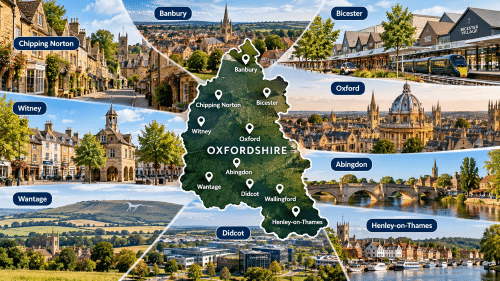
Oxford provides historic city living alongside universities, hospitals, research and culture. Bicester and Banbury connect the county’s north with major road and rail routes. Didcot, Harwell and Milton Park sit within one of the UK’s important science and technology areas. Abingdon and Wallingford offer Thames-side settings, while Witney, Woodstock, Burford and Chipping Norton provide different routes into West Oxfordshire and the Cotswolds.
Further south, Henley-on-Thames combines riverside living with access towards London and the Thames Valley.
The real question is therefore not simply whether Oxfordshire is a desirable place to live. It is which part of Oxfordshire supports the life you expect to live after moving day.
When property becomes part of that decision, you can explore Mortgage Brokers in Oxfordshire and compare advisers who cover different parts of the county.
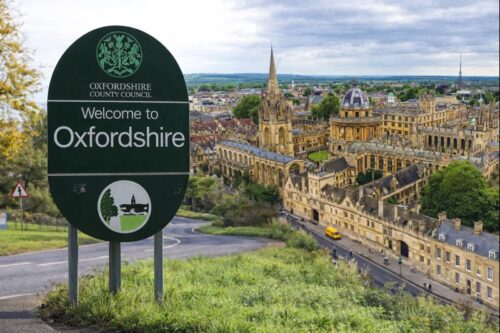
Oxfordshire Gives You More Than One Way to Live
Oxfordshire changes character considerably as you travel across it.
Oxford itself combines medieval streets, university buildings, residential suburbs and newer development. It can suit people who want access to employment, hospitals, education, culture and public transport without relying entirely on a car.
North Oxfordshire feels different. Banbury is a substantial market town with rail and road connections towards Oxford, Birmingham and London. Bicester has expanded considerably and combines established housing with newer neighbourhoods and two railway stations. Oxfordshire County Council notes that Bicester has direct rail links towards Oxford, London and Birmingham and significant planned housing and employment growth.
To the west, Witney, Woodstock, Burford and Chipping Norton add market-town and Cotswold character.
South and Vale locations offer another choice. Abingdon, Wantage, Grove, Didcot and Wallingford can connect households with employment around Oxford, Science Vale and the wider Thames Valley.
Then there is Henley-on-Thames, where the River Thames, rail access and higher-value residential property create another type of Oxfordshire move.
Two people asking why move to Oxfordshire may therefore be searching for entirely different things.
One may want laboratories and research employment.
Another may want a village school and countryside.
A third may need a train into London.
Oxfordshire allows those priorities to exist within the same county.
Oxfordshire Housing: One County, Five Distinct Markets

A single Oxfordshire-wide house-price figure can disguise how different local markets are.
The latest ONS figures for July 2026 recorded provisional average house prices of approximately:
- £357,000 in Cherwell
- £414,000 in the Vale of White Horse
- £419,000 in West Oxfordshire
- £472,000 in Oxford
- £476,000 in South Oxfordshire
The difference is substantial.
First-time buyers in Oxford paid an average of £404,000 in July 2026, compared with £306,000 in Cherwell, £332,000 in the Vale of White Horse and £337,000 in West Oxfordshire.
That means a buyer could be comparing:
- an apartment or terrace in Oxford;
- a newer home around Bicester;
- a family property in Banbury;
- a commuter home around Didcot;
- a village property near Witney;
- a riverside home in Henley or Wallingford;
- a period property in Woodstock;
- a larger rural home in South or West Oxfordshire.
Property type can affect the mortgage as much as the postcode.
Lease length, listed status, unusual construction, acreage, outbuildings, service charges, new-build incentives and rural access can all influence valuation or lender criteria.
For buyers taking their first step onto the market, the First-Time Buyer Mortgage Guide can explain deposits, affordability, and the mortgage process.
For current local housing figures, the Office for National Statistics provides regularly updated housing data.
Education Is Part of Oxfordshire's Identity
Education in Oxfordshire is not simply a lifestyle extra. It forms part of the county’s identity and economy.
The University of Oxford is internationally recognised, but the education landscape extends far beyond the university.
Oxford Brookes University adds another major higher-education presence, while colleges, sixth forms, apprenticeships and further education operate across the county.
Independent education is also prominent.
Radley College, for example, is an independent school in Abingdon, Oxfordshire. Get Information About Schools. Other independent schools are found in and around Oxford, Abingdon, Headington and several surrounding communities.
For a family planning a move, however, education shouldn’t be reduced to an individual school’s reputation.
The practical questions matter:
- What is the daily journey?
- Does admission depend on a catchment area?
- Will childcare change?
- Do both adults commute?
- Is school transport available?
- Will independent-school fees form part of future expenditure?
- Will the chosen property still work as children get older?
Regular education commitments can also affect disposable income and mortgage affordability.
Where private education forms part of the household plan, Education Finance may be relevant.
A house, a school, and a household budget aren’t three separate decisions. They often become one.

Science, Research and Innovation Change the Employment Picture
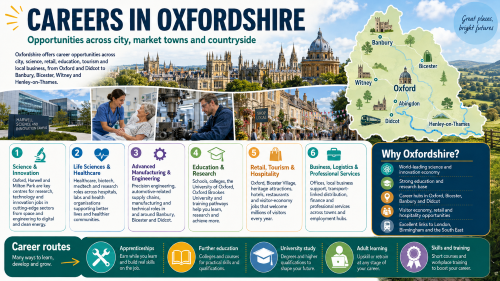
Not everyone considering why move to Oxfordshire is planning to commute out of the county.
Oxfordshire has a distinctive research and knowledge economy.
Oxford itself supports substantial employment across universities, healthcare, research, publishing, technology, professional services, tourism and the public sector.
Further south, Harwell, Culham, Milton Park and the wider Science Vale area have created strong concentrations of science, engineering, space, energy, life sciences and technology employment.
Bicester has a different employment mix. Oxfordshire County Council identifies Bicester Village as a significant employer and economic driver, alongside Bicester Motion and other planned employment growth.
Banbury also has employment across manufacturing, logistics, retail and services.
That creates a wide range of borrower profiles.
Someone moving for work may receive:
- a conventional salary;
- bonuses;
- research or academic income;
- consultancy income;
- contract income;
- company-director remuneration;
- dividends;
- retained profits;
- income from more than one source.
Those differences matter because lenders assess each type of income differently.
A move prompted by a career opportunity therefore needs to consider both where the job is and how the income will be assessed for mortgage purposes.
Rail, Road and Everyday Travel Shape Where Oxfordshire Works Best
Transport is one practical reason why locations in Oxfordshire suit very different households.
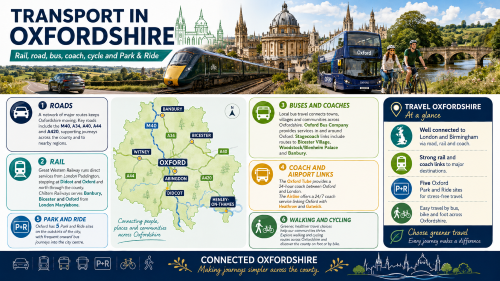
Oxford and Didcot Parkway connect towards London Paddington.
Bicester North, Bicester Village and Banbury provide Chiltern rail connections, including routes towards London Marylebone and Birmingham.
Road travel is shaped by the M40, A34, A40, A420 and A41.
Oxford itself operates a substantial Park and Ride network. Oxford City Council currently lists five Park and Ride locations around Oxford: Pear Tree, Oxford Parkway, Thornhill, Redbridge and Seacourt.
This matters because commuting should not be judged by rail time alone.
A household should also consider:
- getting to the station;
- parking;
- ticket costs;
- peak-time road congestion;
- school runs;
- hybrid-working patterns;
- how often the journey will actually be made.
Living further from a workplace may mean a larger home for the budget, but travel costs and time can reduce the savings.
Conversely, paying more to live near a station may simplify daily life.
The useful calculation is therefore broader than the monthly mortgage payment.
Heritage, Countryside and Culture Give Oxfordshire Its Character

Oxfordshire contains internationally recognised landmarks alongside places that residents may use far more regularly.
Blenheim Palace at Woodstock is one of the county’s best-known destinations.
Oxford itself contains the Bodleian Library, Ashmolean Museum, Radcliffe Camera, Sheldonian Theatre and extensive university architecture.
The county also extends into the Cotswolds, while the River Thames runs through Oxford, Abingdon, Wallingford and Henley.
Other leisure possibilities include:
- walking and cycling routes;
- Thames-side activities;
- country parks;
- historic market towns;
- museums;
- gardens;
- independent shopping;
- theatres and live events;
- countryside around the Chilterns and Cotswolds.
The reason this matters to a relocation page is simple.
You are not choosing somewhere merely to sleep between working days.
You are choosing what surrounds the rest of your life.
Dining Out: The Best Places to Dine in Oxfordshire
Oxfordshire has a varied food and drink scene. Residents can enjoy pubs, cafés, restaurants, tearooms, riverside dining, farm shops, markets, breweries and distilleries.
Oxford has city-centre restaurants, student cafés, rooftop dining, pubs and river venues. Henley-on-Thames and Abingdon offer riverside places to eat. Woodstock and the Cotswolds offer country pubs, hotels and independent dining.
The county also has food and drink experiences. Experience Oxfordshire highlights afternoon tea, restaurants, brewery and distillery tours, cafés, tearooms, boat trips and local places to visit.
Bicester, Banbury, Witney, Thame and Wallingford also offer cafés, pubs and local restaurants. Rural areas add village inns and farm-shop produce.

The Mortgage Should Fit the Move, Not Define It
A property search becomes more useful when mortgage planning happens alongside it.
Oxfordshire contains areas where the amount required to buy can vary significantly over relatively short distances.
Someone comparing Bicester with Oxford city may face a different deposit and borrowing requirement.
A buyer choosing between Didcot and Henley-on-Thames may find the same budget produces very different property options.
That can affect:
- deposit size;
- loan-to-value;
- monthly payments;
- mortgage term;
- affordability;
- lender choice;
- valuation;
- service charges;
- remaining money for other household priorities.
The property can introduce additional considerations.
An Oxford apartment may involve leasehold criteria and service charges.
A cottage around Burford or Woodstock may be listed or of older construction.
A rural property can include land or outbuildings.
A newer development around Bicester or Didcot may involve new-build lender criteria.
If several areas are under consideration, Find a Mortgage Adviser by Location can help identify advisers who cover the locations being compared.
The most useful question is not always:
“What is the maximum I can borrow?”
It may be:
“What level of borrowing still allows me to live the life I am moving here for?”
That distinction matters.

Later-Life Moves Can Change the Meaning of Home
Not every move is about getting another bedroom or reducing the commute.
Some people considering why move to Oxfordshire may be approaching retirement or rethinking what they need from their home.
They might be:
- downsizing from a larger property;
- moving closer to children or grandchildren;
- leaving a city for a market town;
- reducing maintenance commitments;
- looking for better access to services;
- moving after retirement;
- considering how property wealth fits into longer-term finances.
Locations such as Witney, Wallingford, Thame, Woodstock, Abingdon and parts of West Oxfordshire can appeal to people who want established communities without necessarily remaining in Oxford itself.
The financial questions can change too.
Someone approaching retirement may need to consider pension income, an existing mortgage, future affordability and whether downsizing releases enough capital.
Equity release is a different decision from a conventional residential mortgage and should be considered separately.
Where later-life borrowing is relevant, homeowners can explore Equity Release Advisers in Oxfordshire.

Higher-Value Oxfordshire Homes Need a More Precise Approach

Higher-value property is a genuine feature of parts of Oxfordshire, but it should not be applied to the county as a whole.
The latest ONS data illustrates the difference.
In Oxford, the average detached property was approximately £960,000 in July 2026. In South Oxfordshire, the overall average property price was around £476,000, while mortgage-purchased homes averaged about £478,000.
Higher-value markets can be found around locations such as:
- Oxford;
- Henley-on-Thames;
- North Oxford;
- Woodstock;
- certain Cotswold villages;
- parts of South Oxfordshire;
- some villages surrounding Oxford.
Larger mortgages can also coincide with more complex earnings.
A borrower might receive:
- partnership drawings;
- investment income;
- annual bonuses;
- restricted shares;
- dividends;
- retained company profits;
- foreign income;
- income from several businesses or assets.
In these circumstances, choosing an adviser solely because they are geographically closest may not be the most useful approach.
Experience with High Net Worth Mortgage Brokers may be relevant when borrowing requirements, asset position, or income structure fall outside straightforward lender criteria.
That internal link belongs naturally on an Oxfordshire page because the county combines high-value property with senior professional, academic, medical, scientific and entrepreneurial employment.
Oxfordshire Can Make Sense at Very Different Stages of Life
The answer to why move to Oxfordshire can change depending on when the question is asked.
A graduate may be drawn by Oxford’s universities or research economy.
A first-time buyer may compare Bicester, Banbury, Didcot or other areas where their budget goes further than in Oxford itself.
A family may look towards Abingdon, Witney, Wantage, Grove, Kidlington or established market towns.
Someone working in science and technology may focus on access to Harwell, Culham, Milton Park or Oxford.
A senior professional may prioritise North Oxford, Henley or convenient London connections.
Someone approaching retirement may prefer a market town, village or riverside community.
That range is one of Oxfordshire’s strengths.
A successful move should not only work when the keys are collected.
It should have enough flexibility to continue working when employment changes, children grow, commuting patterns alter or financial priorities shift.

Browse Mortgage Advisers Covering Oxfordshire
Once you have decided where you may want to live, the next question is whether the mortgage fits the property and the circumstances behind the move.
Connect Experts lets you compare advisers by location, mortgage expertise, language and other relevant preferences.
Use the Connect Experts mortgage adviser directory to find advisers covering Oxfordshire.
Compare experience with the decision you need to make rather than simply choosing the closest postcode.
Connect Experts is a mortgage adviser directory and matching platform. It does not provide mortgage advice directly. Mortgage advice is provided by the adviser or firm you choose.
People who found this page helpful also explored these related topics:

Mortgage Broker in Woodstock: Historic & HNW Homes

Mortgage Broker in Witney: Homes, Costs and Advice

Mortgage Broker in Wantage: New-Build & Local Advice

Mortgage Broker in Wallingford: Find Suitable Advice

Mortgage Broker in Thame: Property, Price and Criteria

Mortgage Broker in Oxford: Property & Borrowing Guide
Neighbouring Counties
FAQs: Why Move to Oxfordshire?
Does Oxfordshire work well for someone employed in science or technology?
It can, particularly where work is based around Oxford, Harwell, Culham, Milton Park or the wider Science Vale area. The county has substantial activity in research, life sciences, engineering, space, energy and technology. When choosing where to live, compare the actual workplace, road or rail journey and hybrid-working pattern rather than assuming Oxford city is automatically the most convenient location.
Where could I live in Oxfordshire without living in Oxford itself?
The answer depends on what matters most. Bicester, Banbury and Didcot offer significant rail connections. Abingdon, Witney and Kidlington provide established alternatives around Oxford, while Wantage, Grove, Wallingford and Thame offer different market-town settings. Compare housing costs, commuting, and local services together.
Why is buying in Oxford city different from some other parts of the county?
Oxford is one of Oxfordshire’s higher-value markets. The average house price was approximately £472,000 in July 2026, while first-time buyers paid around £404,000. Flats, leaseholds, period housing and limited city-centre supply can also introduce different valuation and affordability considerations. Office for National Statistics
Which parts of Oxfordshire have more of a countryside or Cotswold character?
West Oxfordshire generally provides some of the clearest access to Cotswold landscapes and market-town living. Witney, Woodstock, Burford, Chipping Norton and surrounding villages offer a different environment from Oxford, Bicester or Didcot. Rural living can provide space and character, but transport, broadband, schools and access to services should be considered before moving.
How important are rail links when choosing where to live in Oxfordshire?
They can be significant, but station-to-station time is only part of the decision. Oxford and Didcot connect to Paddington, while Bicester and Banbury connect to Marylebone and Birmingham. Buyers should also consider the journey to the station, parking, ticket costs and how often they need to commute.
What costs should I compare alongside the mortgage before moving to Oxfordshire?
Consider commuting, council tax, childcare, school costs, service charges where relevant, insurance, maintenance and the costs associated with the particular property type. A lower purchase price may not create a lower overall household cost if travel or maintenance increases significantly.