
Why move to Cumbria? Because moving home isn’t always about finding a different property. It is about deciding how much space, time, community and everyday freedom you want around you.
Cumbria offers a combination that’s hard to capture in one description.
Carlisle provides city living and regional employment. Kendal and Penrith combine market-town convenience with access to open countryside. Barrow-in-Furness has a strong industrial and maritime identity. Whitehaven and Workington offer west-coast living, while Windermere, Ambleside, Keswick and Bowness-on-Windermere sit within or near some of England’s most recognisable landscapes.
The county also contains the Lake District National Park, part of the Yorkshire Dales National Park, the Solway Coast and sections of Hadrian’s Wall country.
The real question, therefore, is not simply whether Cumbria is attractive.
It is which part of Cumbria fits the life you want to create after the move.
If the move is becoming a financial decision, you can also explore Mortgage Brokers in Cumbria and compare advisers across the county.
Lakes, City Life or Coast: Cumbria Gives You Very Different Choices
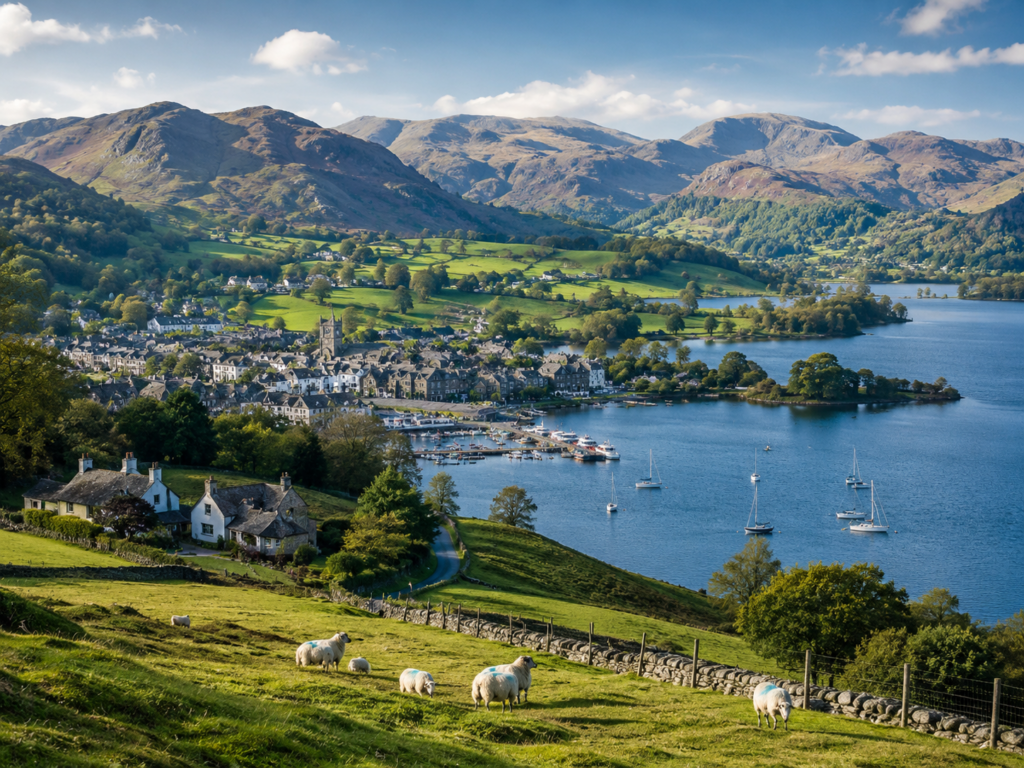
One reason people ask why move to Cumbria is the variety contained within the county.
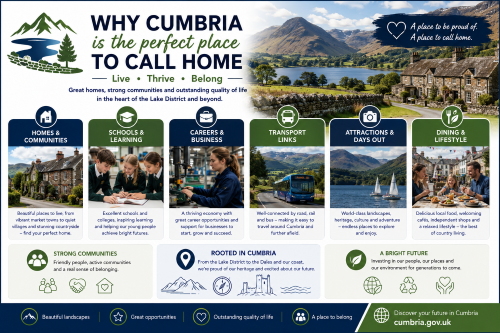
Carlisle is Cumbria’s main city and provides shops, employment, education, transport links and services for a wide surrounding area.
Kendal has a very different character. It is a historic market town with access towards the Lake District and south Cumbria.
Penrith provides another practical base, particularly for people who want access to the M6, Eden Valley and northern Lake District.
Further west, Whitehaven, Workington, Maryport and surrounding communities offer coastal living and access to the west Cumbrian economy.
Barrow-in-Furness and Ulverston serve the Furness peninsula, where engineering, manufacturing and maritime employment are important.
Then there are Lake District locations such as:
- Windermere;
- Bowness-on-Windermere;
- Ambleside;
- Keswick;
- Grasmere;
- Coniston.
These areas offer a completely different daily experience, with tourism, outdoor activity, and rural surroundings playing a much greater role.
UNESCO describes the English Lake District as a mountainous cultural landscape shaped by glaciation, farming and settlement over centuries.
Cumbria therefore offers more than one lifestyle.
It offers several.
Cumbria House Prices Can Change Considerably by Area
Housing is another important reason behind why move to Cumbria.
The county is now split between Cumberland Council and Westmorland and Furness Council, so the latest ONS housing data is published separately for each area.
In Cumberland, the average house price was £171,000 in July 2026. First-time buyers paid an average of £152,000, while those who bought with a mortgage paid an average of £173,000.
In Westmorland and Furness, the average house price was £230,000 in July 2026. First-time buyers paid an average of £193,000, while mortgage buyers paid £228,000 on average.
That difference already shows why a single “Cumbria average” can be misleading.
Property type also changes the picture. In July 2026, detached homes averaged:
- £285,000 in Cumberland;
- £391,000 in Westmorland and Furness.
A buyer might therefore be comparing:
- a city home in Carlisle;
- a terraced property in Whitehaven;
- a family house in Penrith;
- a market-town property in Kendal;
- a coastal home around Barrow or Ulverston;
- a traditional stone cottage;
- a detached rural property;
- a Lake District home in or around Windermere or Ambleside.
Older stone properties, rural homes, listed buildings, holiday-letting areas, properties with land, and individual construction types can all affect valuation and lender considerations.
For first-time buyers, this mortgage guide can also help explain deposits, affordability and the application process.

Schools, Distance and Family Life Matter More in a Rural County

Education can shape a move differently in Cumbria because distance matters.
A school that looks close on a map may require a longer rural journey than you expect. Weather, road conditions and public transport can also affect everyday routines in more isolated areas.
Cumbria has state schools, colleges, university provision and independent education.
Sedbergh School, for example, is an independent boarding and day school in the county’s east. Its wider campus also includes prep and nursery provision.
Families may therefore want to think about:
- school journey times;
- rural transport;
- childcare arrangements;
- whether both parents commute;
- sixth-form or college access;
- school fees where relevant;
- fuel costs;
- how much family expenditure may change after moving.
Regular education costs can affect disposable income and mortgage affordability.
Where independent education forms part of a longer-term plan, Education Finance may also be relevant.
A larger house or quieter location can be appealing, but the practical cost of family life should be considered alongside the purchase price.w
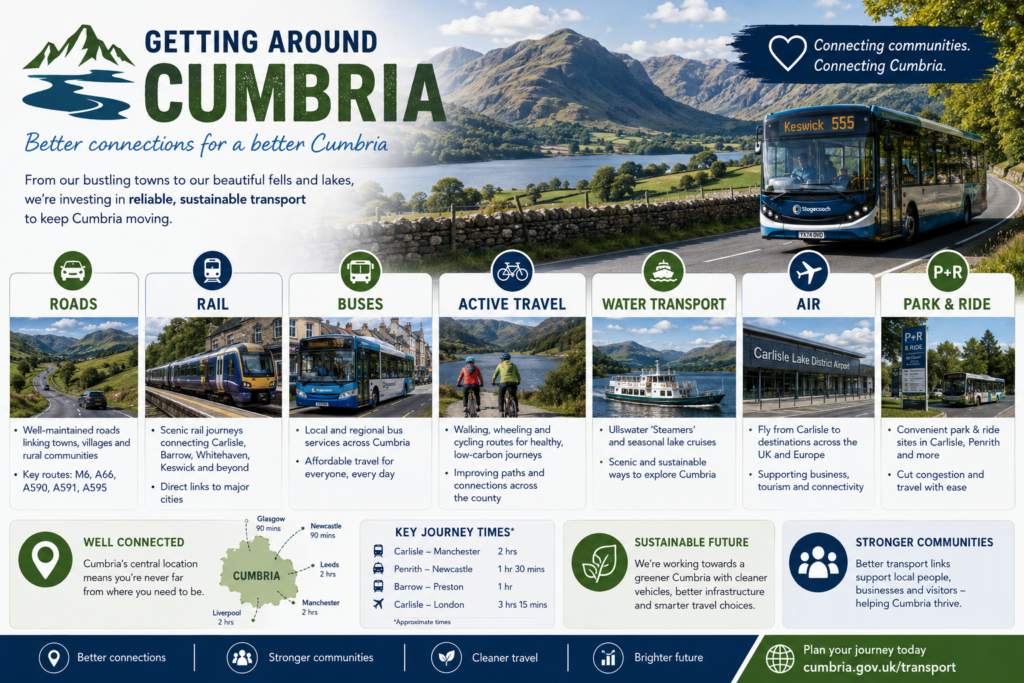
Travel in Cumbria Requires a Different Kind of Planning
Transport can strongly influence whether a particular Cumbrian location works.
The M6 runs through the eastern side of the county and provides important north-south access through locations including Carlisle and Penrith.
Rail also matters.
Carlisle, Penrith and Oxenholme Lake District sit on the West Coast Main Line, providing connections towards Scotland, Lancashire, Manchester and London.
Other rail routes connect communities including:
- Kendal;
- Windermere;
- Barrow-in-Furness;
- Ulverston;
- Whitehaven;
- Workington;
- Maryport.
However, distance in Cumbria should not be judged purely in miles.
A short-looking journey through rural roads can take longer than expected, especially during poor weather or peak visitor periods.
Before choosing where to live, consider:
- distance to work;
- school runs;
- access to railway stations;
- winter driving;
- local bus availability;
- fuel costs;
- access to healthcare and shopping;
- broadband where home working matters.
In Cumbria, the practical journey can sometimes matter as much as the destination.
Cumbria Has Attractions That Residents Can Actually Use
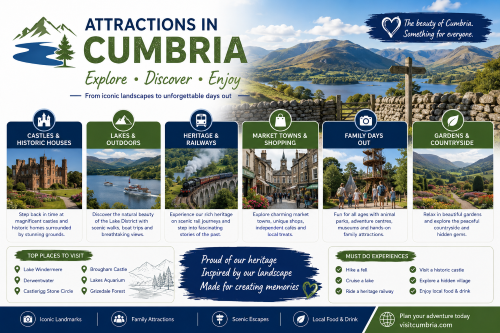
Cumbria’s best-known attraction is the Lake District, but the county offers much more.
The English Lake District is recognised by UNESCO as a World Heritage Site and covers around 2,292 square kilometres.
Elsewhere, residents can access:
- Hadrian’s Wall;
- Carlisle Castle;
- Ullswater;
- Derwentwater;
- Windermere;
- the Solway Coast;
- Ravenglass and Eskdale;
- Furness Abbey;
- market towns and historic villages;
- walking and cycling routes throughout the county.
These places are not just visitor attractions.
For someone living nearby, they can become part of weekends, family time, and everyday leisure.
That is an important part of answering why move to Cumbria.
The county gives people access to experiences that elsewhere may require a holiday or long journey.
Food, Town Centres and Local Character
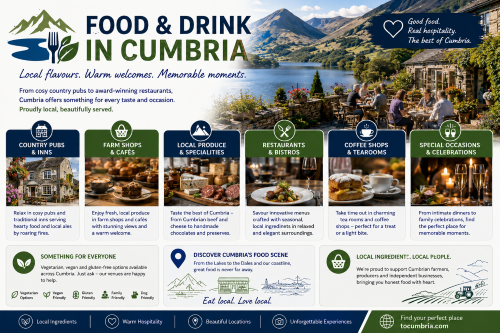
Cumbria has strong ties to local produce, hospitality, and tourism.
Kendal, Keswick, Carlisle, Penrith, Ambleside, Windermere and Ulverston each offer a different mix of cafés, restaurants, pubs, markets and independent businesses.
Rural pubs and village cafés are part of the social fabric in many smaller communities.
The county is also closely associated with farming, food production and hospitality, sectors that remain part of Cumbria’s current economic priorities.
This matters because relocation decisions are often made using large factors such as house prices and work.
Yet after the move, smaller things become important:
- where you buy food;
- where you meet friends;
- whether the nearest town feels convenient;
- what is open outside tourist season;
- how easily you can reach everyday services.
A place becomes home through routine, not scenery alone.
A Cumbria Mortgage Can Depend on the Property as Much as the Borrower
Moving to Cumbria can bring property types some buyers haven’t dealt with before.
A modern house in Carlisle may raise fairly conventional lending questions.
A rural property might involve:
- private drainage;
- oil heating;
- acreage;
- outbuildings;
- shared access;
- unusual construction;
- agricultural restrictions.
A Lake District property may be older, listed or located within a conservation area.
A coastal home may require consideration of exposure, insurance or flood information.
A flat may involve lease terms and service charges.
Therefore, you should not consider the mortgage separately from the property.
If you are comparing several locations, Find a Mortgage Adviser by Location can help you identify advisers who cover the places you are considering.
The useful question is not only:
“How much can I borrow?”
It is also:
“Does this mortgage still leave enough room for the life I moved here to have?”

Larger Homes, Complex Income and Specialist Borrowing
Cumbria should not be described as uniformly high-value.
That would ignore the substantial differences between Carlisle, west Cumbria, Furness and the Lake District.
However, some properties in areas such as Windermere, Ambleside, Bowness-on-Windermere and other sought-after Lake District locations can involve larger borrowing requirements or individual property characteristics.
Borrowers may also have more complex income because of:
- business ownership;
- retained profits;
- investment income;
- partnership income;
- bonuses;
- multiple properties;
- tourism businesses;
- agricultural income.
In those circumstances, adviser experience may matter more than physical distance.
Where borrowing size, assets or income structure are more complex, High Net Worth Mortgage Brokers may be relevant.
That link should only be treated as appropriate where the borrower’s circumstances genuinely require that level of specialist experience.

Later-Life Moves Can Look Very Different in Cumbria

For some people, why move to Cumbria becomes a retirement question.
A later-life move might involve:
- downsizing;
- moving closer to family;
- leaving a larger city;
- choosing a quieter market town;
- moving nearer countryside or the coast;
- reducing housing costs;
- using property wealth as part of retirement planning.
A household moving to Keswick may have completely different priorities from someone relocating to Carlisle, Penrith, Kendal or the coast.
Older borrowers may also need to think about:
- outstanding mortgage balances;
- pension income;
- future maintenance costs;
- access to healthcare;
- public transport;
- whether a rural property remains practical later in life.
If you’re considering equity release, treat it as a separate specialist decision rather than an ordinary residential mortgage.
Homeowners can explore Equity Release Advisers in Cumbria where later-life borrowing is relevant.
Why Cumbria Can Suit Different Stages of Life
Cumbria can work differently depending on your stage of life.
A first-time buyer may look to Carlisle or more affordable towns in West Cumbria.
A family may compare Penrith, Kendal, Ulverston or locations with practical school and transport connections.
Someone relocating for work may choose Barrow, west Cumbria or Carlisle depending on the employer.
A remote worker may value space, broadband and access to the outdoors more.
Someone approaching retirement may prefer a smaller market town, village or coastal community.
There is no single correct answer to why move to Cumbria.
That is one of the county’s advantages.
It lets people choose between city, coast, market town, fellside village, and rural living without leaving the wider county.
A successful move should make sense not only when you receive the keys, but when work changes, children grow older and priorities become different.
Browse Our Advisers in Cumbria
Once you have narrowed down where you want to live, the next question is whether your mortgage fits the property and the circumstances behind the move.
Connect Experts lets you choose mortgage advisers by location and other relevant preferences.
Compare advisers based on the decision you need to make rather than simply choosing the closest postcode.
Connect Experts is a mortgage adviser directory and matching platform. It does not provide mortgage advice directly. Mortgage advice is provided by the adviser or firm you choose.




People who found this page helpful also explored these related topics:

Mortgage Broker in Maryport: Clear Mortgage Options
Mortgage Broker in Cockermouth: Specialist Local Help

Mortgage Broker in Ulverston: Advice for LA12 Buyers

Mortgage Broker in Whitehaven: Coastal Mortgage Advice

Mortgage Broker in Kendal: Clear Specialist Advice

Mortgage Broker in Barrow-in-Furness: Expert Mortgage Insight
Neighbouring Counties
FAQs: Why Move to Cumbria?
Is Cumbria only suitable for people who want rural living?
No. Cumbria includes rural communities, but it also has Carlisle, market towns such as Kendal and Penrith, industrial centres including Barrow-in-Furness and larger west Cumbrian towns. The right location depends on whether you prioritise work, schools, transport, countryside or access to services.
Where might first-time buyers find more accessible prices in Cumbria?
Prices vary considerably. In July 2026, the average first-time buyer price in Cumberland was £152,000, compared with £193,000 in Westmorland and Furness. Individual towns and properties can differ significantly from these averages, so buyers should compare locations rather than rely on a single county figure.
What should I check before buying a rural property in Cumbria?
Consider access, drainage, heating, broadband, outbuildings, land, construction type, insurance and how far the property is from work, schools and services. The lender may also need to assess whether any unusual property features fit its lending criteria.
Does Cumbria have good employment opportunities outside tourism?
Yes. Cumbria has important employment in nuclear and energy, defence, advanced manufacturing, engineering, agriculture, food production, public services, and tourism. Current economic strategies identify these sectors as central to future growth.
Is living in the Lake District more expensive than other parts of Cumbria?
It can be. Housing demand and property types vary considerably across Cumbria, and Westmorland and Furness currently has a higher average house price than Cumberland. Lake District locations can also include individual, older or rural properties whose value may sit well above local averages.
What should I compare before deciding where to live in Cumbria?
Compare house prices with travel time, employment, schools, broadband, healthcare, shopping, winter accessibility, and the lifestyle you want. A lower purchase price may not automatically mean lower overall household costs if work or essential services require frequent, longer journeys.