
Why move to Lincolnshire? Because where you live changes more than your postcode. It changes how far you travel, what your home costs, what surrounds you each morning and how much room the rest of your life has to grow.
Lincolnshire offers a combination that is difficult to reduce to one description.
Lincoln brings cathedral-city living, university life and established employment. Grantham and Stamford provide very different market-town experiences in the south-west. Louth and Horncastle sit closer to the Lincolnshire Wolds, while Skegness and Mablethorpe add coastal living. Boston, Spalding and Bourne connect the county with major agricultural and food-production areas.
Lincolnshire is also one of England’s largest counties, stretching from the Humber towards the Wash and combining city, coast, fenland, farmland, market towns and the Lincolnshire Wolds.
That variety is the real answer to why move to Lincolnshire.
It is not about finding one lifestyle that suits everybody. It is about having very different ways to build a life within the same county.
When the move becomes a borrowing decision, you can explore Mortgage Brokers in Lincolnshire and compare advisers across the county.
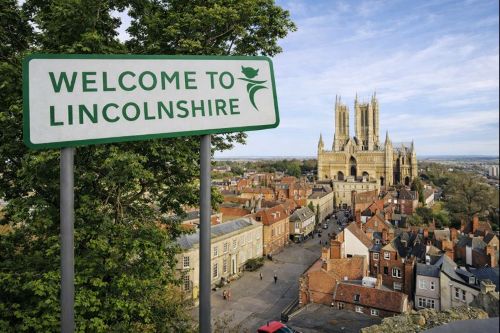
City, Wolds, Fens or Coast: Lincolnshire Gives You Room to Choose
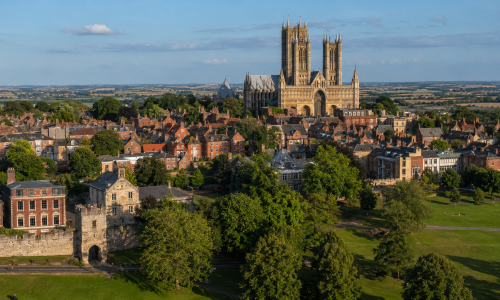
Lincolnshire cannot be understood through Lincoln alone.
The city provides the county’s main urban centre, with Lincoln Cathedral, Lincoln Castle, the University of Lincoln, shops, restaurants and established residential neighbourhoods. Its Cathedral Quarter, Bailgate and Brayford Waterfront give very different versions of city living within a relatively compact area. Visit Lincoln
Travel east and the landscape changes.
The Lincolnshire Wolds are defined by rolling chalk countryside, open views, valleys and rural settlements. The area is nationally protected as a National Landscape because of its distinctive character and natural beauty.
Further east, towns such as Skegness and Mablethorpe connect Lincolnshire with the North Sea coast.
To the south, Stamford has a very different identity, with historic stone buildings and stronger links towards Peterborough and the A1 corridor.
Boston, Spalding and surrounding fenland communities sit within one of England’s most important food-producing areas.
That means two people asking why move to Lincolnshire may be looking for completely different things.
One may want a home close to Lincoln.
Another may want space near the Wolds.
A third may prioritise the coast.
Someone else may simply want more property for their budget than they could find further south.
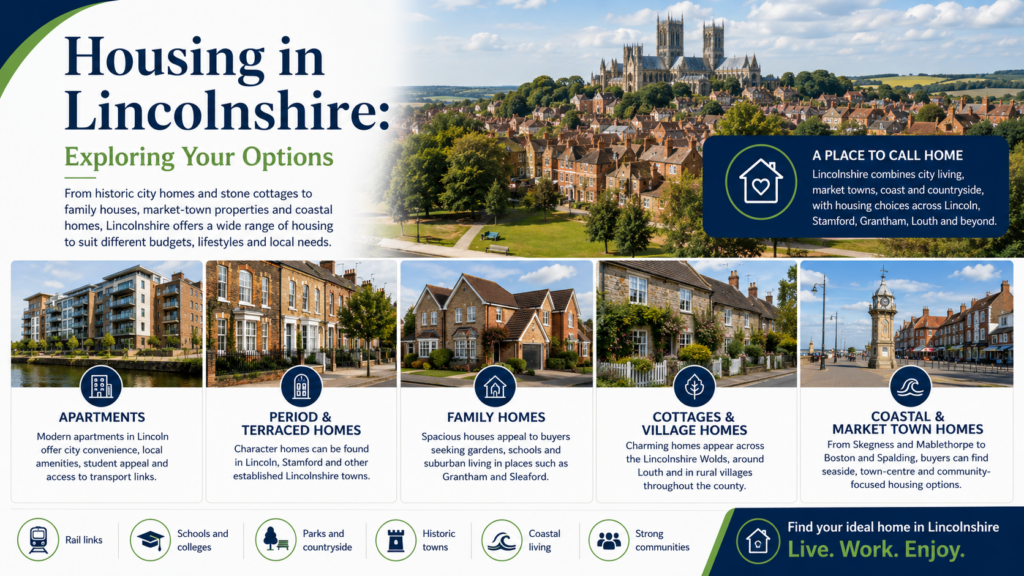
Housing in Lincolnshire: Price Is Only Part of the Story
Lincolnshire’s property market is not uniform.
The UK House Price Index recorded an average price of approximately £219,000 across Lincolnshire in July 2026, up 2.5% from the previous year. Lincoln itself averaged around £187,000.
Those figures should be treated as context rather than a valuation for an individual property.
Local markets can differ considerably.
A buyer might be comparing:
- a terrace or apartment in Lincoln;
- a family house around Grantham;
- a period home in Stamford;
- a cottage near Louth or Horncastle;
- a rural property with land or outbuildings;
- a home around Boston or Spalding;
- a coastal property around Skegness or Mablethorpe.
The property itself can affect the mortgage decision as much as its postcode.
Rural homes may involve:
- private drainage;
- septic tanks;
- acreage;
- agricultural restrictions;
- outbuildings;
- private roads;
- unusual construction;
- fewer comparable sales.
Coastal properties can raise different questions around valuation, insurance, construction and intended use.
For first-time buyers, location can materially change affordability. The average first-time buyer price in Lincoln was £168,000 in July 2026, according to the ONS.
If you are at the beginning of the process, the First-Time Buyer Mortgage Guide can help explain deposits, affordability and how a mortgage application works.
Education Can Shape Where Families Settle

For some households, moving to Lincolnshire is partly an education decision.
Lincoln offers higher education through the University of Lincoln, while the wider county includes state schools, grammar schools, colleges, and independent schools.
Families may also consider towns such as Stamford, Lincoln, Grantham and surrounding areas because of the education available locally or within practical travelling distance.
Yet school reputation should not be considered in isolation.
It is worth thinking about:
- daily school travel;
- catchment areas;
- childcare;
- public transport;
- whether both parents commute;
- school fees where applicable;
- how future education costs affect household finances.
These costs matter because mortgage affordability does not exist separately from the rest of family life.
If independent education forms part of a longer-term plan, Education Finance may be useful.
The right house can still be the wrong financial decision if you ignore the costs around it.
Lincolnshire's Economy Is More Diverse Than Its Rural Image Suggests
Lincolnshire is strongly associated with agriculture, but its economy extends beyond farming.
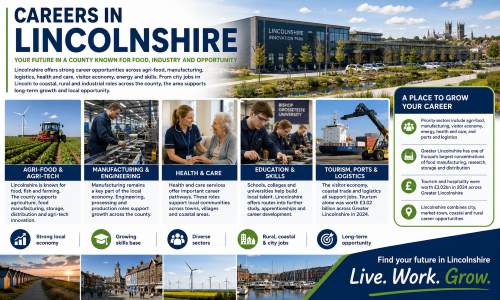
Lincolnshire County Council identifies key sectors including agri-food, energy, manufacturing, logistics, tourism and public services. Greater Lincolnshire has particularly strong food production and distribution activity, with substantial employment linked to agriculture, processing, and logistics.
Lincoln, Boston and Gainsborough are important employment centres, while Grantham, Spalding and Louth also support significant local employment.
This creates very different types of mortgage applicants.
Some buyers will have straightforward employed income.
Others may receive:
- agricultural income;
- seasonal income;
- overtime;
- bonuses;
- company-director income;
- retained profits;
- self-employed earnings;
- income from several businesses;
- rental or investment income.
For mortgage purposes, the way income is structured can matter as much as the amount earned.
A buyer moving for work in food production, engineering, energy, logistics, or agriculture may therefore require a different lender assessment than someone with a standard monthly salary.
Getting Around Lincolnshire Requires More Than Looking at a Map
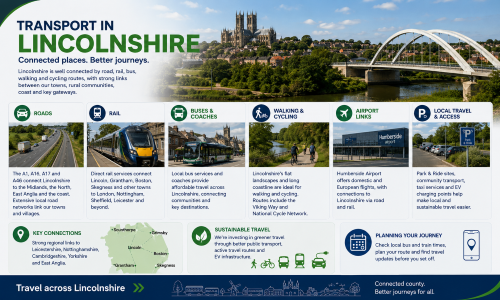
Transport is an important part of the decision because Lincolnshire is a large and predominantly rural county.
The western side benefits from the A1 corridor, which is particularly relevant to Grantham and Stamford.
Lincoln is connected by regional rail services and direct services towards London, while Grantham sits on the East Coast Main Line and provides strong north-south rail connections.
Road routes include:
- A1;
- A15;
- A16;
- A17;
- A46;
- A52
connect major towns and different parts of the county.
However, rural travel can differ greatly from urban commuting.
Someone living in a village near Louth, Market Rasen or the Wolds may rely much more heavily on a car than someone living centrally in Lincoln.
Before moving, compare:
- actual door-to-door travel;
- fuel costs;
- station parking;
- school journeys;
- access to healthcare;
- hybrid-working patterns;
- frequency of public transport;
- winter travel on rural roads.
A cheaper house further from work can stop feeling cheaper once the weekly travel is included.
Heritage, Coast and Countryside Give Lincolnshire Its Character
Lincolnshire has a strong sense of place because its history and geography are so visible.
Lincoln Cathedral and Lincoln Castle dominate Lincoln’s historic centre, while the city carries traces of Roman, Viking, and medieval history.
Beyond the city, Lincolnshire includes:
- the Lincolnshire Wolds National Landscape;
- market towns including Louth and Horncastle;
- the East Coast;
- historic aviation sites;
- walking and cycling routes;
- country estates;
- fenland landscapes;
- villages and agricultural communities.
The Lincolnshire Wolds sit between Lincoln and the coast, characterised by rolling chalk hills, valleys, and open views.
North Kesteven also has a strong aviation identity, including operational RAF stations and historic airfields.
This matters because why move to Lincolnshire is ultimately a lifestyle question.
The county offers space, heritage, and landscape in ways very different from densely populated parts of England.

Food, Markets and Everyday Life in Lincolnshire
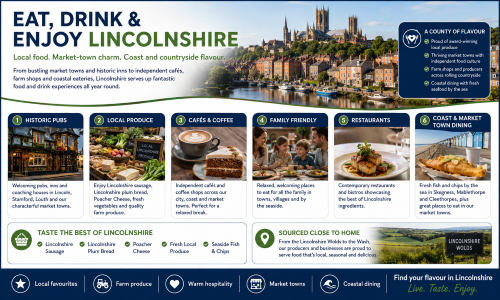
A place becomes home through ordinary routines rather than tourist attractions.
Lincoln has the county’s largest concentration of restaurants, cafés, bars, and entertainment, particularly around the city centre, Cathedral Quarter, Bailgate, and Brayford Waterfront.
Market towns create a different rhythm.
Louth is known for independent shops and local produce, while Horncastle is associated with antiques and a traditional market-town character.
Stamford provides restaurants, cafés and historic streets, while coastal towns offer seaside dining and seasonal tourism.
Lincolnshire’s agricultural economy also gives food a particularly strong local identity.
The county is closely connected with:
- arable farming;
- vegetables;
- food processing;
- seafood;
- meat production;
- food logistics;
- local markets.
These details may seem secondary while searching Rightmove.
After moving, they become part of the life the property was bought to support.
Moving to Lincolnshire Changes the Financial Equation
Once the lifestyle decision becomes a financial one, the property itself starts to matter.
A mortgage lender considers more than the applicant’s salary and deposit.
It may also assess:
- property construction;
- condition;
- valuation;
- lease length;
- service charges;
- flood considerations;
- acreage;
- outbuildings;
- access;
- resaleability;
- loan-to-value;
- income structure.
That can be particularly relevant in a county with such varied housing.
A coastal house, Ipswich flat, listed village property and rural home are not interchangeable from an underwriting perspective.
A suitable adviser can help you understand whether your circumstances and intended property are likely to fit particular lender criteria.
You can compare advisers through the Connect Experts mortgage adviser directory or search more locally through Find a Mortgage Adviser by Location.
For people who would prefer to discuss detailed financial information in another language, Bilingual Mortgage Brokers provides another search route.

Higher-Value Lincolnshire Homes Need a Different Perspective

Lincolnshire should not be presented as a high-net-worth county overall.
However, there are clearly higher-value pockets.
Stamford and selected villages in the south of the county can sit at a very different price point from Lincoln, Boston or many coastal communities. Larger detached homes, country properties and rural estates can also create borrowing requirements that are less straightforward than the county average suggests.
Higher-value borrowing may coincide with more complex income, including:
- dividends;
- retained profits;
- partnership income;
- investment income;
- bonuses;
- property portfolios;
- several business interests;
- income from land or agricultural activity.
In these circumstances, simply choosing the nearest adviser may not be enough.
Experience with High-Net-Worth Mortgage Brokers may be useful when property value, required borrowing, or income structure falls outside standard lender criteria.
The value of specialist advice is not that the borrower is given a label. It is that the lender’s assessment reflects the real financial picture.
Later-Life Moves Can Mean Something Different in Lincolnshire
Not every move is about needing more bedrooms or shortening a commute.
Some households may move to Lincolnshire because they want:
- a quieter setting;
- a bungalow;
- more space around the home;
- proximity to family;
- access to the coast;
- a market-town environment;
- lower housing costs;
- a different pace of life in retirement.
Areas around Louth, Woodhall Spa, Horncastle, Stamford, the Wolds and parts of the coast can appeal to people whose priorities are changing.
Later-life moves create their own financial questions.
Someone approaching retirement may need to consider:
- whether to repay an existing mortgage;
- whether pension income will support borrowing;
- whether downsizing releases enough capital;
- the running costs of a larger rural property;
- access to services;
- how property wealth fits into longer-term planning.
Equity release should be considered separately from an ordinary residential mortgage.
Homeowners considering this route can explore Equity Release Advisers in Lincolnshire, where the product, long-term cost and alternatives can be considered with a suitably qualified adviser.

Lincolnshire Can Work at Different Stages of Life
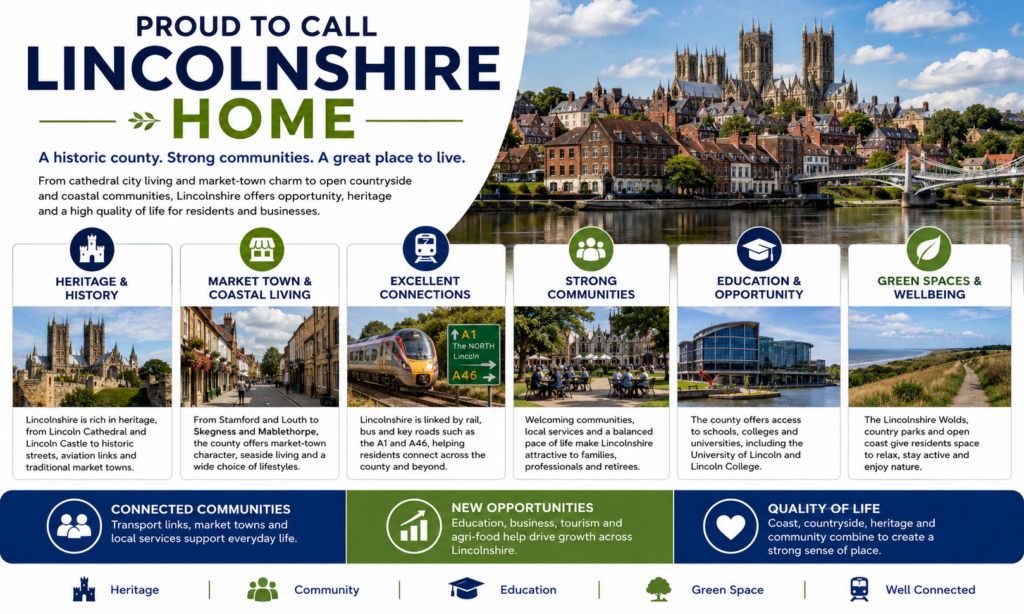
The appeal of Lincolnshire can change as life changes.
A student or graduate may choose Lincoln because of university, employment and city life.
A first-time buyer may compare Lincoln, Boston, Gainsborough or other lower-priced markets.
A family may look towards Grantham, Bourne, Sleaford or market-town locations.
Someone wanting a rural lifestyle may consider the Wolds, Horncastle, Market Rasen or villages surrounding larger towns.
A buyer seeking higher-value period property may look towards Stamford.
Someone approaching retirement may prioritise Woodhall Spa, Louth, the coast or smaller rural communities.
There is no single answer to why move to Lincolnshire.
Its advantage is that city living, farmland, historic towns, coastline and countryside exist within the same wider county.
A successful move should work beyond completion day.
It should still work when employment changes, children grow up, commuting patterns alter or retirement becomes more important than the journey to work.
Browse Our Advisers in Lincolnshire
Once you know where you might want to live, the next question becomes whether your mortgage fits the property and the circumstances behind the move.
Connect Experts allows you to compare mortgage advisers by location, mortgage expertise, language and other relevant preferences.
Use the Connect Experts adviser directory to compare advisers rather than choosing solely by distance.
Connect Experts is a mortgage adviser directory and matching platform. It does not provide mortgage advice directly. Mortgage advice is provided by the adviser or firm you choose.




People who found this page helpful also explored these related topics:
Mortgage Broker in Horncastle: Confident Mortgage Advice

Mortgage Broker in West Deeping: Trusted Mortgage Guidance

Mortgage Broker in Eastgate: Practical Expert Advice for LN11

Mortgage Broker in Uphill Lincoln: Mortgage Led Advice

Mortgage Broker in Boston: Expert Help That Fits

Mortgage Broker in Scunthorpe: Specialist Mortgage Advice
Neighbouring Counties
FAQs: Why Move to Lincolnshire?
Is Lincolnshire a good option if I want more space for my budget?
It can be. Average property prices in Lincolnshire are below those in many areas of southern England, but the county contains several distinct markets. Lincoln, Boston, the coast, Stamford and rural areas can all differ substantially. Compare the purchase price with travel, maintenance, heating and other household costs before deciding what represents better value. The county-wide average was approximately £219,000 in July 2026.
Which parts of Lincolnshire suit people who prefer rural living?
The Lincolnshire Wolds, villages around Louth and Horncastle, the Market Rasen area, and many communities across central and southern Lincolnshire offer a distinctly rural character. Rural living offers space and countryside access, but buyers should also consider road travel, broadband, private drainage, property maintenance, and access to local services.
Can I commute from Lincolnshire to London?
Yes, from some locations, but practicality varies significantly. Grantham has strong East Coast Main Line connections towards London, while Lincoln also has rail services towards the capital. Stamford can also work for some commuters via nearby mainline connections. Journey frequency, ticket costs, station parking and the distance from home to the station should all be considered.
Why can a rural Lincolnshire property be harder to mortgage?
It is not necessarily harder, but some rural homes have features that require closer lender assessment. These may include acreage, agricultural restrictions, outbuildings, private drainage, unusual construction, private access or limited comparable sales. The lender’s valuation and individual property criteria will determine whether those features matter.
Is Lincolnshire suitable for someone approaching retirement?
This can be especially true for people seeking market-town, coastal, or rural living. Areas such as Louth, Woodhall Spa, Stamford, the Wolds and some coastal communities may appeal for different reasons. The decision should also consider access to healthcare, transport, running costs, and whether the move will involve an existing mortgage or later-life borrowing.
What should I compare before choosing where to live in Lincolnshire?
Compare more than the house price. Consider employment, travel time, public transport, schools, broadband, healthcare, flood or coastal considerations where relevant, property maintenance and the amount of borrowing required. A cheaper property may not always mean lower monthly household costs.