
Why move to Shropshire? Because sometimes a move is less about getting somewhere faster and more about creating room for the life you actually want to live.
Shropshire offers something increasingly hard to find in one county: substantial countryside, historic market towns, established communities, and homes ranging from compact town properties to cottages, converted buildings, and larger rural houses.
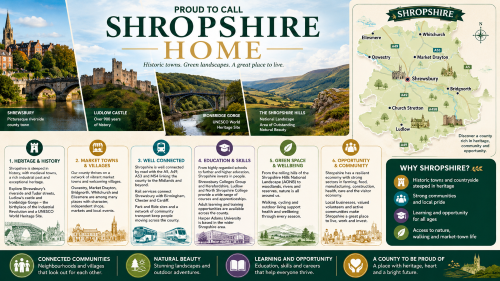
Shrewsbury provides the county’s principal urban centre. Ludlow combines heritage with a strong food identity. Bridgnorth rises above the River Severn, while Oswestry connects northern Shropshire with the Welsh border. Church Stretton sits within the Shropshire Hills, while Market Drayton, Whitchurch, Ellesmere and Much Wenlock each offer a different version of market-town life.
That variety changes the question.
It is not simply why move to Shropshire?
It is which part of Shropshire gives your work, family, finances and future the right amount of space?
When the lifestyle decision becomes a mortgage decision, you can explore Mortgage Brokers in Shropshire and compare advisers across the county.
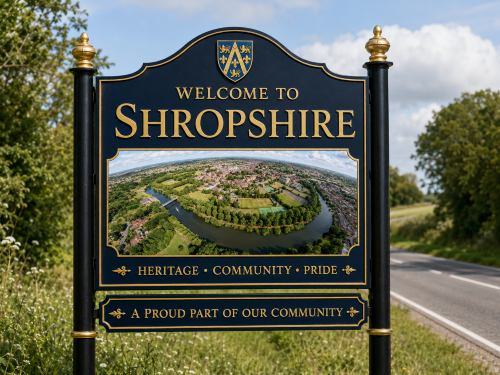
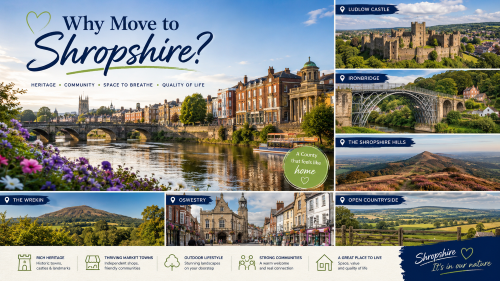
Market Town, Hills or Open Countryside: Shropshire Gives You Room to Choose
Shropshire isn’t centred on one town.
Its character changes considerably as you travel through the county.
Shrewsbury combines a historic centre, riverside neighbourhoods, established suburbs and newer housing around its edges.
Ludlow is smaller and strongly associated with medieval architecture, independent businesses, food and South Shropshire countryside.
Oswestry has close links with Wales and serves a wide rural area in the county’s north-west.
Bridgnorth offers a distinctive riverside and hillside setting, while Church Stretton provides access to the Shropshire Hills.
Further north, Market Drayton, Whitchurch and Ellesmere provide traditional market-town alternatives. Smaller villages can offer considerably more rural surroundings.
Shropshire Council’s latest destination strategy describes landscapes, heritage, market towns and communities as central to what makes the county distinctive. Tourism itself contributes more than £1 billion to the local economy.
For somebody asking why move to Shropshire, this choice matters.
One household may want Shrewsbury’s services and rail connections. Another may prioritise a garden, walking routes and a village setting. Someone else may want access to the Welsh border, Birmingham or a local rural business.
The county allows those decisions to be made without every move leading towards a large city.
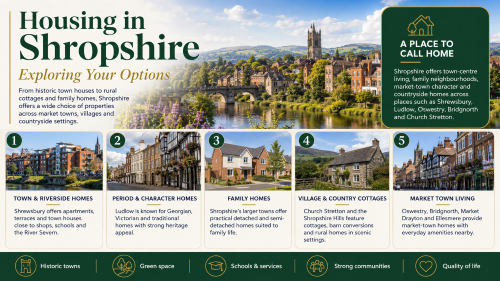
Shropshire Homes: A Market Shaped by More Than Price
The latest Office for National Statistics figures provide useful context.
In July 2026, the average house price in Shropshire was £275,000. First-time buyers paid an average of £223,000, while mortgage-purchased homes averaged £274,000.
Average property prices were:
- Detached: £414,000
- Semi-detached: £258,000
- Terraced: £206,000
- Flats and maisonettes: £134,000
Those figures should not be treated as the value of a particular home.
Shropshire contains very different property types, including:
- Georgian and Victorian town housing;
- listed and period properties;
- traditional cottages;
- converted barns and agricultural buildings;
- modern housing developments;
- homes with larger gardens or acreage;
- properties using private drainage;
- rural homes with private access arrangements.
The mortgage question can therefore change with the property.
A conventional house on a modern estate may fit mainstream lender criteria relatively easily. A listed cottage, converted building or house with significant land may require more detailed valuation and underwriting.
That distinction is one reason local housing knowledge can matter alongside price.
View the latest ONS housing figures for Shropshire.
Education Decisions Can Shape Where Families Settle
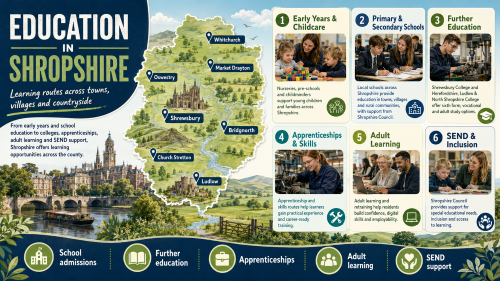
Moving with children often changes what location means.
Parents may initially compare bedrooms, gardens and journey times. Later, school travel, catchment arrangements, childcare, and education costs can become equally important.
Shropshire has state primary and secondary provision, sixth-form options, further education and independent schools.
Independent education is established in the county, including schools in and around Shrewsbury and Ellesmere.
For families, the practical questions extend beyond whether a school is nearby:
- What does the daily journey look like?
- Will transport be required?
- Does the location work for more than one child?
- Will both parents need to commute?
- Could education expenditure change materially over the mortgage term?
- Is the home still affordable once those costs are included?
Regular education costs can affect disposable income and lender affordability assessments.
If private education is part of the family’s longer-term financial plan, Education Finance explains possible funding routes and why you should assess school fees alongside the household’s wider finances.
Choosing a school and choosing a home can look like separate decisions.
For many families, they are financially connected.
Work in Shropshire Looks Different from a Big-City Economy
Not everybody moving to Shropshire is travelling elsewhere for employment.
The local economy reflects the county itself.
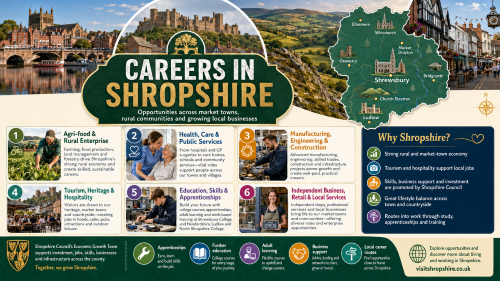
Shropshire Council identifies agriculture, care, retail, and tourism as key sectors, while its employment data also highlights health, manufacturing, wholesale and retail, and education as major job sources.
Self-employment is another important feature.
Census-based Shropshire Council data showed 11.2% of people aged 16 and over in employment were self-employed, compared with 9.5% across England.
That is relevant to mortgage planning.
People moving to or within the county may earn through:
- employment;
- self-employment;
- farming or rural enterprises;
- family businesses;
- company-director income;
- contracting;
- seasonal activity;
- multiple income sources.
Lenders assess each income type differently.
Someone relocating to run a business from Shropshire may therefore face a different mortgage assessment from an employee moving into the county with a fixed salary.
Employment should form part of the relocation decision before the mortgage application starts, not after.
Getting Around Shropshire Requires a Different Kind of Planning
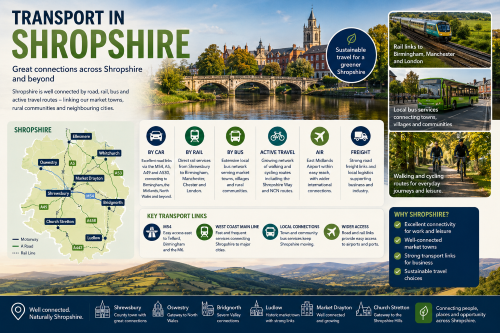
Transport is a key difference between Shropshire and more urban counties.
The county is large and comparatively rural. That can make a car more important in some communities, while Shrewsbury and several market towns provide rail and bus connections.
Major road routes include the A5 and A49, while routes towards Telford and the West Midlands connect Shropshire with the wider regional road network.
Shrewsbury is an important rail hub for journeys to destinations including Birmingham, Chester and Wales.
But judge a countryside postcode by everyday practicality rather than the nearest main road on a map.
Before moving, consider:
- actual journey time to work;
- school runs;
- station distance;
- bus availability;
- road conditions on regular routes;
- access to healthcare and shops;
- how frequently you travel;
- whether hybrid or home working changes the calculation.
Shropshire Council’s draft long-term transport strategy identifies reliable and affordable connections as important for access to jobs, services, economic growth and community wellbeing.
A home offering more space may still be the right decision even if journeys become longer.
The key is understanding that trade-off before moving.
From Ironbridge to the Shropshire Hills: The County Has a Distinctive Sense of Place
Shropshire’s heritage and landscape are not decorative extras to the relocation decision.
They are a large part of what makes living in the county different.
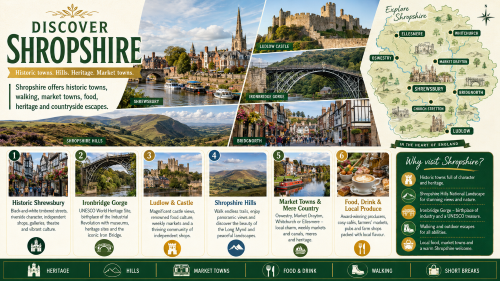
Ironbridge Gorge is internationally associated with the Industrial Revolution.
The Shropshire Hills National Landscape covers a substantial area in the county’s south and includes some of its most recognisable countryside.
Other places that contribute to the county’s identity include:
- Shrewsbury’s historic centre and River Severn;
- Ludlow Castle;
- Much Wenlock;
- Church Stretton;
- The Wrekin;
- Attingham Park;
- Bridgnorth and the Severn Valley;
- Ellesmere and its meres;
- Oswestry and the landscape towards the Welsh border.
This also has a property dimension.
Homes in conservation areas, listed buildings and rural locations can sometimes require more detailed valuation or lender assessment than conventional modern housing.
The scenery may be part of why move to Shropshire, but the property still has to work technically as well as emotionally.
Food, Markets and Everyday Life Have a Strong Local Identity
People often stay somewhere for reasons different from what first drew them there.
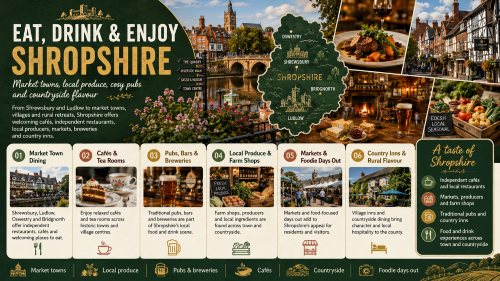
Shropshire has a strong market-town culture.
Shrewsbury combines independent businesses, restaurants, pubs, markets and cultural venues.
Ludlow has a well-established food reputation, shaped by local produce, independent businesses, and its wider rural setting.
Market Drayton is closely tied to food production and agriculture, while smaller towns and villages support local pubs, cafés, farm shops, and seasonal events.
The county’s visitor economy reflects that mix of landscape, heritage, food, and communities, and is worth more than £1 billion, according to Shropshire Council.
There is also a practical point.
If moving away from a major city, everyday life changes.
You may gain countryside, space and quieter surroundings but use different shops, travel further for some services or rely more heavily on nearby market towns.
That is not automatically better or worse.
It is simply part of deciding whether Shropshire fits the way you actually live.
Making the Mortgage Fit the Move, Not the Other Way Around
A property search becomes more useful when the financial limits are understood early.
Shropshire’s housing stock means the calculation is not always limited to income and deposit.
A mortgage lender may also need to assess:
- property construction;
- acreage;
- outbuildings;
- access;
- private drainage;
- listed status;
- agricultural restrictions;
- lease terms;
- valuation;
- future saleability.
Meanwhile, the borrower may need to consider:
- deposit size;
- loan-to-value;
- existing credit commitments;
- childcare;
- travel costs;
- income structure;
- mortgage term;
- future household plans.
A £275,000 county average cannot answer those individual questions.
Someone buying a newer home around Shrewsbury may have a very different application than someone buying an older property outside Ludlow or a rural home near the Welsh border.
If you are comparing several towns or villages, Find a Mortgage Adviser by Location lets you search advisers covering the places you are considering.
The useful question is not only:
How much could I borrow?
It is:
What level of borrowing still lets me move and improve the rest of my life?
That distinction fits the real purpose behind moving to Shropshire.

Larger Shropshire Homes Can Bring More Complex Finance

Shropshire should not be presented as a uniformly high-net-worth county.
That would not be accurate.
However, the county does include larger rural houses, substantial detached homes, period properties, country houses, and homes with land, where borrowing requirements can be more complex.
ONS data shows detached homes averaged £414,000 in July 2026, well above the county-wide average.
Higher-value property can be found in and around locations such as:
- parts of Shrewsbury;
- Ludlow;
- Much Wenlock;
- Church Stretton;
- selected villages around the Shropshire Hills;
- rural areas containing larger homes and estates.
The complexity may come from the borrower rather than the purchase price.
Income could include:
- business profits;
- dividends;
- retained profits;
- agricultural income;
- investments;
- multiple companies;
- partnership drawings;
- bonuses;
- assets that are substantial but not immediately liquid.
Where borrowing size, assets or income fall outside straightforward lender models, experience with High Net Worth Mortgage Brokers may be relevant.
The important point is not to label a borrower or postcode as wealthy.
Recognise when conventional affordability calculations don’t tell the full financial story.
When Moving Later in Life Changes the Priorities
A move does not always mean buying a bigger property.
For some people, the reason for considering Shropshire may be exactly the opposite.
Later-life movers may be looking for:
- a smaller home;
- less maintenance;
- proximity to family;
- a market town with everyday services;
- countryside after years of city living;
- a property better suited to retirement;
- somewhere that makes long-term living easier.
Places such as Ludlow, Church Stretton, Shrewsbury, Much Wenlock, and smaller communities may appeal for different reasons, depending on transport, services, and personal priorities.
The financial questions can also change with age.
A homeowner might need to consider whether to:
- repay an existing mortgage;
- use proceeds from a previous property;
- continue borrowing into retirement;
- downsize;
- retain savings;
- use pension income for affordability;
- release some housing wealth.
Equity release should be treated as a specialist later-life decision rather than an automatic solution.
For homeowners considering that route, Equity Release Advisers in Shropshire explains how property type, age, existing borrowing and longer-term plans can affect the decision. Sometimes the best later-life move releases capital naturally through downsizing.
Sometimes it does not.
The financial structure should follow the later-life plan rather than define it.

Why Shropshire Can Suit More Than One Chapter of Life
A strong location doesn’t suit everyone for the same reason.
A first-time buyer may concentrate on price and access to work. A family may prioritise schools, bedrooms and outdoor space. A self-employed person may value room to work from home or proximity to their business.
Someone leaving a large city may want a market town without giving up shops, restaurants and transport completely.
A later-life mover may want a smaller home close to everyday services.
That is one of Shropshire’s practical strengths.
The county contains urban, market-town, village and deeply rural settings within the same wider area. But you should still judge a move over years rather than on moving day.
Think about:
- how work may change;
- whether children will need different schools;
- how much driving is realistic;
- whether the property will still suit you later;
- how running costs compare;
- whether the mortgage leaves sufficient financial flexibility.
The strongest answer to why move to Shropshire is therefore personal.
A county can offer space, scenery and character.
The right move is the one that makes those advantages sustainable in everyday life.
Browse Our Advisers in Stropshire
Once you have decided that Shropshire could work for you, the next question is whether the borrowing fits the property and your circumstances.
Connect Experts lets users compare advisers by location, mortgage expertise, language, and other preferences.
Use the Mortgage Adviser Directory to compare profiles before deciding who to contact.
Connect Experts is a mortgage adviser directory and matching platform. It does not provide mortgage advice directly. Advice is provided by the adviser or firm you choose.

People who found this page helpful also explored these related topics:
Mortgage Broker in Bridgnorth: Expert Mortgage Choices
Mortgage Broker in Broseley for Your Circumstances
Mortgage Broker in Church Stretton: Expert Shropshire Advice
Mortgage Broker in Cleobury Mortimer DY14: Advice
Mortgage Broker in Craven Arms SY7: Expert Mortgage Advice
Mortgage Advice in Ellesmere SY12: Find Expert Brokers
Neighbouring Counties
FAQs: Why Move to Shropshire?
Is Shropshire a practical place to live if I work from home?
This can be especially true for people who want more residential space or a quieter setting. However, broadband availability, mobile coverage and travel requirements should be checked for the exact property, especially in rural areas. Someone who commutes only occasionally may assess the location very differently from someone travelling several days each week.
Do rural Shropshire properties create different mortgage considerations?
They can. Some rural homes may include land, outbuildings, private drainage, non-standard access, agricultural restrictions or unusual construction. These features don’t automatically prevent mortgage lending, but they can affect valuation and lenders’ criteria. Discuss the property with an adviser before assuming it will be treated like a standard suburban house.
What is the housing market like for first-time buyers in Shropshire?
ONS figures show first-time buyers paid an average of £223,000 in July 2026. This is a county-wide figure, so actual prices vary considerably between towns, villages and property types. First-time buyers should compare deposit requirements, commuting costs, property type, and purchase price.
Which parts of Shropshire offer a market-town lifestyle?
Shrewsbury, Ludlow, Bridgnorth, Oswestry, Market Drayton, Whitchurch, and Much Wenlock each offer a different kind of market-town living. Their housing, transport, and surrounding countryside vary, so the best choice depends on whether you prioritise rail links, employment, schools, services, or access to rural areas.
Why might self-employed buyers need to plan early when moving to Shropshire?
Self-employment is relatively common in Shropshire. Lenders can differ in how they assess company accounts, sole-trader profits, retained profit, dividends and fluctuating income. Preparing accounts, tax documents, and income evidence early can make it easier to identify realistic mortgage options before you make an offer. Shropshire Council’s Census analysis recorded a higher self-employment rate than England overall.