
Why move to Norfolk? Because where we choose to live eventually becomes more than a postcode. It shapes how far we travel, what we see from the window, where children grow up, and how much space everyday life can take up.
Norfolk offers several very different versions of that life.
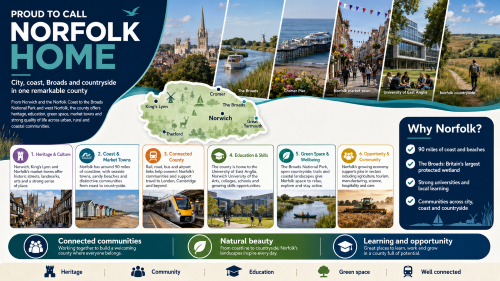
Norwich provides city living, employment, universities and culture. King’s Lynn connects west Norfolk with Cambridgeshire and the Midlands. Great Yarmouth combines a working coastal economy with seaside living. Towns such as Wymondham, Dereham, Attleborough and Thetford provide inland alternatives, while Cromer, Sheringham, Wells-next-the-Sea, Holt and the wider North Norfolk coast offer a very different relationship with the sea and countryside.
Then there are the Broads, long stretches of coast, market towns, villages and some of England’s most recognisable open landscapes.
So the better question is not simply why move to Norfolk?
It is which part of Norfolk gives you the balance you want between home, work, travel, family life and the years ahead.
When the move becomes a financial decision, you can explore Mortgage Brokers in Norfolk through Connect Experts and compare advisers who cover different parts of the county.
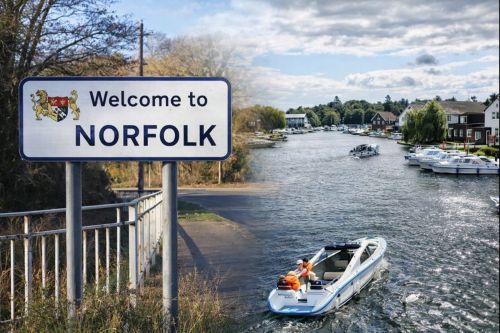
Coast, City or Open Country: Norfolk Gives You Room to Choose
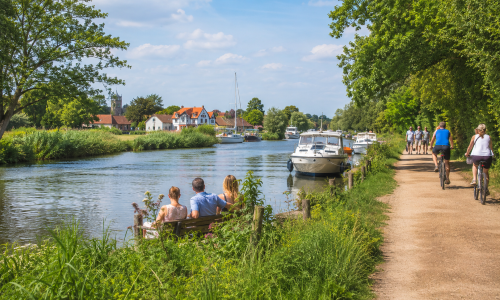
Norfolk offers more than one lifestyle.
Norwich is the county’s main city, with shopping, cultural venues, universities, healthcare and established residential neighbourhoods.
King’s Lynn has a historic centre, rail services, and access to West Norfolk, the Fens, and Cambridgeshire.
Great Yarmouth combines a traditional resort with port, energy and marine activity.
Further inland, Dereham, Wymondham, Attleborough and Thetford provide market-town and commuter alternatives.
Along the coast, places such as Cromer, Sheringham, Wells-next-the-Sea, Hunstanton, Blakeney and Burnham Market attract people who value the sea, walking, wildlife and smaller communities more.
Norfolk’s coastline includes wide sandy beaches, salt marshes, cliffs, nature reserves and coastal villages. Visit Norfolk also highlights the distinctive character of the Norfolk Coast, including its nature reserves, chalk reef and market towns.
The Broads create another option entirely, with waterways, riverside settlements and open landscapes.
This variety matters because two households asking why move to Norfolk may be searching for completely different things.
One may want to walk to work in Norwich.
Another may want a village garden.
A third may want to wake up close to the coast.
Norfolk allows those choices to exist within the same county.
Norfolk House Prices Reveal Several Different Markets
Housing costs vary significantly across Norfolk, so a single county average would hide more than it explains.
Latest ONS figures for July 2026 show average house prices of:
- £209,000 in Great Yarmouth
- £224,000 in Norwich
- £266,000 in King’s Lynn and West Norfolk
- £269,000 in Breckland
- £293,000 in North Norfolk
- £312,000 in South Norfolk
- £313,000 in Broadland
These figures are provisional, but they demonstrate how much location can change the financial decision.
First-time buyers also face very different price points. In July 2026, the average first-time buyer price was £183,000 in Great Yarmouth, £202,000 in Norwich, £221,000 in King’s Lynn and West Norfolk, £224,000 in Breckland, £238,000 in North Norfolk and £270,000 in Broadland.
That means the same budget could lead to very different property searches:
- a terrace or flat in Norwich;
- a family home around Dereham or Thetford;
- a property in King’s Lynn;
- a coastal home around Cromer or Sheringham;
- a village property in South Norfolk;
- a larger detached home in Broadland;
- a character property in North Norfolk.
Property type matters too.
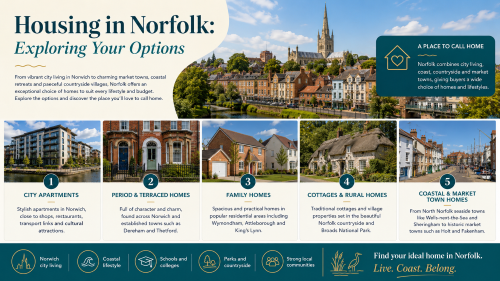
Norfolk contains modern estates, Victorian terraces, cottages, converted buildings, listed homes, rural property, coastal housing and homes with land or outbuildings.
Those features can affect valuation, insurance and lender criteria.
First-time buyers who want to understand deposits, affordability and mortgage applications can also use Connect Mortgages’ First-Time Buyer Mortgage Guide
For the latest local figures, the ONS housing-price service provides district-level data across Norfolk.
Education Can Shape the Map Before the House Search Begins
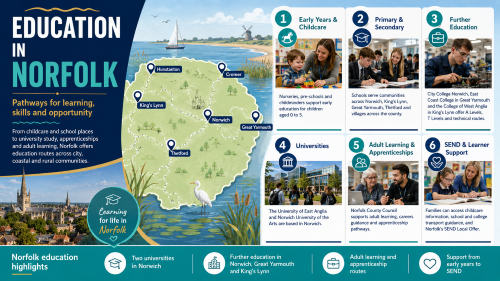
For families, choosing where to live can start with education, not property.
Norfolk has primary and secondary schools, sixth forms, further education colleges and university-level study.
Norwich is home to the University of East Anglia and Norwich University of the Arts, giving the city a strong higher-education presence.
Further education is available through institutions including City College Norwich and the College of West Anglia.
Independent education is also relevant in parts of the county, including schools around Norwich, Holt and other established communities.
That means families may need to look beyond the headline purchase price and consider:
- school journeys;
- admissions and catchment areas;
- childcare;
- transport;
- whether both parents commute;
- school fees where applicable;
- changes to household expenditure after moving.
Regular education costs may influence disposable income and mortgage affordability.
If independent education forms part of a family’s long-term plans, Education Finance may be worth considering alongside the wider household budget.
A home may be a family’s largest purchase, but it is rarely the only financial commitment that matters.
Norfolk’s Economy Is Broader Than Tourism and Agriculture
Some people move to Norfolk for lifestyle.
Others move because their work is already there.
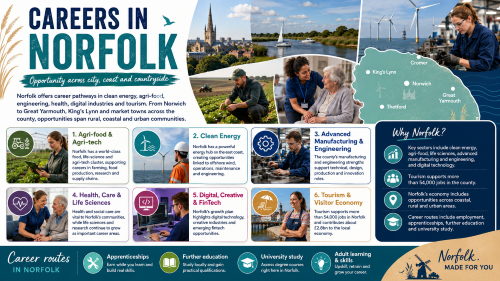
Norfolk has economic activity across energy, engineering, manufacturing, agriculture, food production, healthcare, education, tourism, logistics and digital services.
Norwich supports employment in public services, finance, healthcare, higher education, technology and creative industries.
Great Yarmouth has long-standing links with offshore energy, marine industries and tourism.
King’s Lynn supports manufacturing, logistics, food production, retail and port-related activity.
Agriculture and food remain important across rural Norfolk, while the county’s east coast supports energy infrastructure.
This creates a range of income types.
One applicant may receive a straightforward monthly salary.
Another may have:
- overtime;
- shift income;
- bonuses;
- self-employed profit;
- dividend income;
- retained company profits;
- seasonal earnings;
- income from more than one occupation.
Mortgage lenders don’t always assess these forms of income the same way.
For someone relocating to Norfolk for a new role or business opportunity, the structure and history of the income may be just as important as the property price.
Transport in Norfolk Rewards Choosing the Right Location
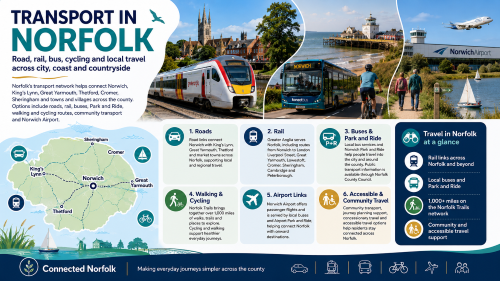
Norfolk’s transport picture changes substantially depending on where you live.
That is important.
A household in central Norwich may rely on trains, buses, cycling, and walking.
Someone in a smaller rural village may depend far more heavily on a car.
The A47 runs east to west across Norfolk, connecting Great Yarmouth, Norwich, Dereham, Swaffham and King’s Lynn before continuing towards Peterborough.
The A11 provides the principal road route south-west from Norwich towards Thetford, Cambridge connections and the wider motorway network.
Rail links are also significant.
Norwich has direct services towards London Liverpool Street, while routes from towns including Diss, Wymondham and Attleborough can make rail commuting practical for some households.
King’s Lynn has direct rail connections towards Cambridge and London King’s Cross.
Norwich Airport provides another transport option for business and leisure travel.
Yet a station on a map does not automatically make a location convenient.
Before moving, consider:
- door-to-door journey time;
- train frequency;
- station parking;
- fuel costs;
- school runs;
- rural road travel;
- hybrid working;
- how often the journey will actually be made.
A cheaper house further from work does not necessarily mean lower household costs once travel and time are included.
The Broads, Coast and Countryside Change Everyday Life
Norfolk’s landscape is not simply a visitor attraction.
For residents, it can become part of ordinary life.
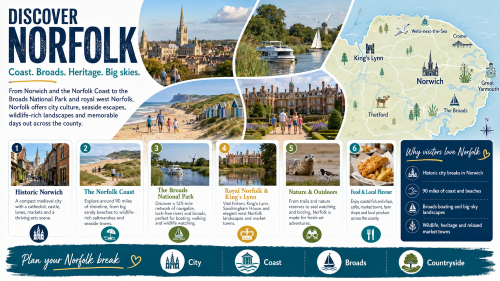
The county contains the Broads, extensive coastline, nature reserves, forests, farmland and large areas of open countryside.
Visit Norfolk describes the county through its coast, landscapes, market towns, villages, the Broads and Norwich.
North Norfolk includes beaches, salt marshes, coastal paths and nature reserves.
Inland, Thetford Forest gives a very different environment.
The Broads provide opportunities for walking, cycling, boating and wildlife watching.
For someone moving from a densely populated urban area, that availability of space can be one of Norfolk’s strongest attractions.
But rural living also requires practical thought.
Some villages may have:
- limited public transport;
- longer journeys to shops;
- fewer nearby services;
- slower travel to major employment centres;
- greater dependence on private transport.
That does not make them less desirable.
It simply means the lifestyle should be understood before the move rather than after it.
Food, Heritage and Local Character Give Norfolk Its Identity
Everyday life is often shaped by the smaller things that never appear on a mortgage illustration.
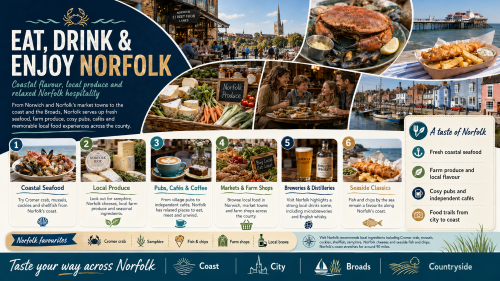
Norfolk has a strong local food identity linked to agriculture, fishing, coastal produce and independent businesses.
Norwich has a substantial restaurant, café and pub scene.
Along the coast, Cromer is closely associated with crab, while Wells-next-the-Sea, Blakeney, Brancaster and other coastal communities offer seafood, pubs and independent dining.
Market towns also support local shops, cafés and producers.
The county’s heritage is equally varied.
Norfolk includes:
- Norwich Cathedral;
- Norwich Castle;
- Sandringham;
- Blickling Estate;
- Holkham Hall;
- Houghton Hall;
- Cromer Pier;
- Thetford Forest;
- Great Yarmouth’s seafront;
- historic market towns and villages.
Visit Norfolk describes the county as a mix of coast, heritage, market towns, the Broads and Norwich.
Those features can appear secondary during a property search.
Once someone lives there, those things often become what defines weekends and family life.
Your Norfolk Move Should Work on Paper as Well as in Practice
Finding a property and arranging the mortgage are connected decisions.
How much someone can technically borrow is only one part of the picture.
A move to Norfolk may also change:
- deposit requirements;
- commuting costs;
- mortgage term;
- council tax;
- school or childcare expenditure;
- energy costs;
- insurance;
- property maintenance;
- monthly travel;
- the amount left for savings and everyday life.
The property itself can also affect which lender you choose. A Norwich apartment may require consideration of lease length and service charges. A historic cottage may involve different construction or valuation issues.
A rural home may include land, private drainage or outbuildings.
A coastal property may require closer attention to exposure, flood information or insurance. If you are comparing several parts of Norfolk, Find a Mortgage Adviser by Location lets you search for advisers covering the areas you are considering.
The important question is not simply:
“How much can I borrow?”
It is:
“What level of borrowing still allows the move to improve my life?”

Coastal and Higher-Value Norfolk Need a More Nuanced View

Norfolk should not be described as uniformly high-value.
It clearly is not.
However, selected areas have distinctive higher-value property markets, particularly along parts of the north Norfolk coast and in established rural communities.
Locations such as Burnham Market, Holkham, Brancaster, Blakeney, Wells-next-the-Sea and parts of Holt can contain premium homes where individual values differ considerably from district-wide averages.
North Norfolk’s overall average was £293,000 in July 2026, while detached homes averaged £409,000.
The local average therefore does not always describe the type of property a particular buyer may be considering.
Larger borrowing can also coincide with less straightforward income.
Applicants may receive:
- bonuses;
- dividends;
- investment income;
- company profits;
- partnership drawings;
- income from several businesses;
- rental income;
- substantial assets alongside variable earnings.
In these cases, the nearest mortgage adviser may not necessarily have the most relevant experience.
Where borrowing size or income complexity justifies it, High Net Worth Mortgage Brokers can help users identify advisers with relevant specialist experience.
The key is not to classify Norfolk as high-net-worth, but to recognise that some Norfolk property and borrowing scenarios require a different level of mortgage assessment.
Later-Life Moves Can Change What Matters About Norfolk
Not everybody who asks why move to Norfolk is looking for a larger house.
Some households may be moving in the opposite direction.
They may be:
- downsizing;
- retiring;
- moving nearer family;
- leaving a busier urban area;
- seeking a bungalow or more manageable home;
- choosing a coastal or market-town location;
- trying to reduce monthly household costs.
Norfolk’s coastal towns, rural communities and established market towns can suit people whose priorities have changed over time.
The financial questions change too.
Someone approaching retirement may need to consider:
- whether an existing mortgage will be repaid;
- how pension income is assessed;
- whether downsizing releases enough capital;
- ongoing property maintenance;
- how long they expect to stay in the new home;
- whether housing wealth should remain untouched.
When equity release is relevant, consider it separately from a conventional residential mortgage because it can affect future finances and inheritance.
Homeowners can explore Equity Release Advisers in Norfolk for specialist later-life advice.

Norfolk Can Suit Very Different Stages of Life
The answer to why move to Norfolk may change depending on where someone is in life. A graduate may choose Norwich for work, culture, or university connections. A first-time buyer may compare Norwich with Great Yarmouth, King’s Lynn, Thetford, or Dereham.
A family may look towards Wymondham, Attleborough, Broadland or South Norfolk.
Someone working remotely may prioritise space, village character, or access to the coast.
A higher-value buyer may consider selected North Norfolk villages.
Someone approaching retirement may prefer a smaller town, bungalow or coastal community. Norfolk doesn’t ask everybody to live the same way.
That is part of its appeal.
The city, coast, Broads, inland towns and countryside all create different answers to the same question.
A successful move should not just make sense on completion day. It should keep working when commuting patterns change, children grow older, or financial priorities shift.
Browse Our Advisers in Norfolk
Once you know which part of Norfolk suits you, the next stage is deciding whether the mortgage fits the property and the finances behind the move.
Connect Experts allows users to compare mortgage advisers by location, expertise and other relevant preferences.
The right adviser search should reflect the decision you are making, not simply the nearest postcode.
Connect Experts is a mortgage adviser directory and matching platform. It does not provide mortgage advice directly. Mortgage advice is provided by the adviser or firm selected by the user.






People who found this page helpful also explored these related topics:
Mortgage Broker in Attleborough – Essential Advice in NR17
How to Find a Watton Mortgage Broker – Safe Proven IP25

Mortgage Broker in Bradwell – A Proven Search Guide

Taverham Mortgage Broker – Essential NR8 Adviser Search

Find the Right Mortgage Adviser in Wymondham NR18
Find a Mortgage Broker in Swaffham – Proven Expert Guide
Neighbouring Counties
FAQs: Why Move to Norfolk?
Is Norfolk a practical place to live if I still need access to London?
It depends on the location and how often you travel. Norwich and King’s Lynn have direct London rail services, while Diss, Thetford and other stations may also be useful for commuters. The key comparison is the full door-to-door journey, including ticket costs, parking, and how many days a week you’ll travel.
Where in Norfolk might a first-time buyer find lower average prices?
Latest ONS data show substantial differences across the county. In July 2026, the average first-time buyer price was £183,000 in Great Yarmouth, £202,000 in Norwich and £221,000 in King’s Lynn and West Norfolk. These are area averages rather than individual property valuations.
Which parts of Norfolk are best suited to coastal living?
Norfolk has several distinct coastal markets. Cromer and Sheringham offer established seaside towns, while Wells-next-the-Sea, Blakeney and surrounding villages have a smaller North Norfolk character. Hunstanton provides a west-facing coastal alternative. Buyers should compare transport, services, property type and insurance considerations rather than choosing on sea views alone.
Does living in rural Norfolk mean relying on a car?
Often, but not always. Norwich and larger towns offer more transport options, while some villages have more limited bus or rail access. A rural home may offer more space, but buyers should check commuting, school runs, shopping, and healthcare access before choosing a location.
Why can coastal or rural Norfolk properties need extra mortgage checks?
The individual property may have features that require closer assessment by a lender or valuer. These can include older construction, listed status, land, outbuildings, private drainage, flood information or coastal exposure. This does not automatically prevent a mortgage, but lender criteria can differ.
What should I compare before deciding where to live in Norfolk?
Compare more than the asking price. Consider employment, commuting, schools, broadband, local services, property type, insurance, council tax, transport costs and how much borrowing leaves room for other priorities. A more expensive location may reduce travel, while a cheaper rural property may increase transport or maintenance costs.