
Why move to Lancashire? Because where you live should give you more than an address; it should make life around it work.
Lancashire offers a combination that is hard to describe with a single label. It has cities and university life, established industrial towns, rural villages, coastline, market centres and some of the North West’s most distinctive countryside.
Preston offers major employment and transport connections. Lancaster combines history, university life and access towards Morecambe Bay. The Fylde Coast brings seaside communities such as Lytham St Annes and Blackpool, while the Ribble Valley and Forest of Bowland offer a very different rural setting.
That range means the answer to why move to Lancashire is different for every household.
For one buyer, it may be the possibility of more space. For another, it may be family connections, employment, access to Manchester, coastal living, or the chance to trade a larger city for somewhere with the countryside closer at hand.
If the move is already becoming a mortgage decision, Mortgage Brokers in Lancashire can help you start comparing advisers across the county.
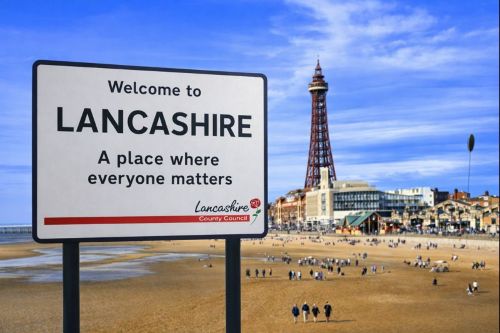
Lancashire Gives You More Than One Way to Live
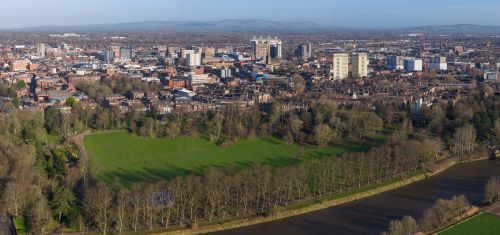
Lancashire does not ask every mover to choose the same lifestyle.
Someone settling in Preston may prioritise rail links, employment and city amenities. A household looking to Lancaster may value its historic centre, university influence, and access to the countryside and coast.
The Fylde Coast offers another experience altogether. Lytham St Annes combines residential neighbourhoods with the coast, while Blackpool provides a larger urban centre with tourism, entertainment and established communities.
Further inland, Clitheroe and the Ribble Valley offer market-town and village living, while Burnley, Accrington, Blackburn, Chorley, Leyland and Nelson each have their own housing, employment and transport patterns.
Then there is the Forest of Bowland National Landscape, which covers extensive moorland, valleys, and stone-built villages across rural Lancashire. Visit Lancashire describes the area as around 312 square miles of moorland, farmland and villages.
This variety matters when deciding why to move to Lancashire, because choosing the county is only the first decision.
The next question is which Lancashire suits you.
House Prices Can Change Significantly Across Lancashire
The Lancashire housing market isn’t a single market.
Different districts contain very different housing stock and price levels.
The latest ONS figures illustrate the point clearly. In Lancaster, the average property price was approximately £203,000 in July 2026, while first-time buyers paid around £181,000 on average.
In West Lancashire, the average property price was around £236,000, while first-time buyers paid about £200,000 in the same month.
The difference becomes even more noticeable when comparing individual locations and property types.
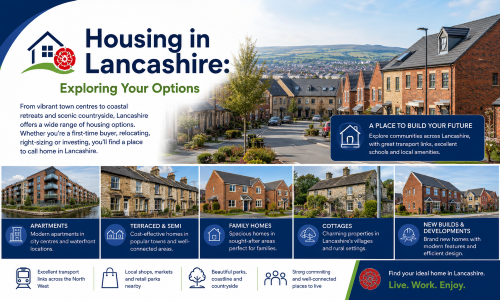
Lancashire includes:
- traditional terraces in former mill towns;
- Victorian and Edwardian homes;
- suburban family housing around Preston, Chorley and Leyland;
- apartments and coastal homes around the Fylde Coast;
- rural cottages and converted properties;
- larger detached homes around Ribble Valley;
- newer developments around expanding commuter locations.
Property type can influence lender assessment as much as postcode.
Older construction, rural access, land, leasehold arrangements, flood exposure or unusual property features may sometimes require more detailed valuation or underwriting.
If you are comparing areas before choosing where to buy, the Find a Mortgage Adviser by Location service lets you search by the place connected to your move.
Families Can Compare Education With the Wider Cost of Living

For families, why move to Lancashire may eventually become a question about where children will grow up rather than simply where parents want to live.
The county offers a broad range of state schools, colleges and independent education.
Lancashire also contains established independent schools including Stonyhurst College in the Ribble Valley area and Rossall School near Fleetwood.
That does not make education the reason everyone should move to Lancashire. It does mean school location can become part of choosing the right town or village.
Families may want to consider:
- school travel;
- catchment arrangements;
- childcare;
- after-school activities;
- future secondary education;
- commuting alongside school journeys;
- the effect of school fees on longer-term household finances.
Where independent education is part of the plan, Education Finance may help families understand how education expenditure could sit alongside their wider financial commitments.
The important point is to look beyond the purchase price.
A home must fit the household budget after everyone moves in.
Work in Lancashire is More Diverse Than Its Industrial Past Suggests
Lancashire’s industrial history still shapes the county, but its employment base is much broader today.
Manufacturing remains particularly important. Lancashire County Council data show that manufacturing accounts for a significant share of employment in areas including Ribble Valley and Pendle, while aerospace and transport-equipment manufacturing have an unusually strong presence compared with England overall.
The county also has substantial employment across:
- health and social care;
- retail and wholesale;
- advanced manufacturing;
- aerospace;
- education;
- professional services;
- logistics;
- hospitality and tourism;
- public-sector organisations.
Preston is a key employment centre, while Lancaster University and the wider education sector shape employment across Lancaster.
The Fylde area has a strong aerospace connection, while manufacturing remains relevant across Burnley, Pendle, Ribble Valley and other parts of east Lancashire.
That means relocating to Lancashire doesn’t always mean commuting elsewhere.
For some households, the move is towards work rather than away from it.
This can also affect mortgage planning. Contractors, directors, self-employed applicants, or people receiving overtime and bonuses may need lenders willing to assess income differently.
Communication is also important; users can search Mortgage Advisers by Language to compare advisers who can conduct detailed financial discussions in a preferred language.

Connections Across the North West Can Shape Where You Settle
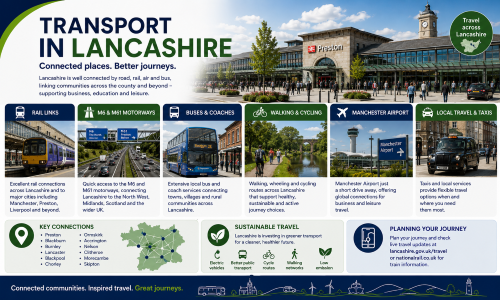
Transport may not be the most exciting part of moving home, but it can decide whether a location continues to work once the novelty of moving has passed.
Lancashire sits on important north-south road and rail routes.
The county’s transport network includes the:
- M6;
- M55;
- M61;
- M65;
- West Coast Main Line;
- regional rail connections towards Manchester, Liverpool, Cumbria and Yorkshire.
Lancashire County Council describes the county as sitting on a nationally significant north-south transport spine, with motorway and rail links connecting the area to regional employment centres and wider transport gateways.
Preston railway station is particularly important for longer-distance services.
For movers considering eastern Lancashire, road and rail connections towards Manchester may matter more. In West Lancashire, links to Liverpool may matter more.
The practical calculation should include more than journey time.
Consider:
- season-ticket or fuel costs;
- station parking;
- hybrid working patterns;
- school journeys;
- childcare arrangements;
- access to major roads;
- how often the household really needs to travel.
A cheaper home can become less attractive if the move creates expensive or exhausting daily travel.
Coast, Countryside and Community Are Part of Lancashire's Appeal
A good place to live needs something beyond convenient roads and affordable bedrooms.
Lancashire has a strong outdoor identity.
The county includes the Forest of Bowland, Pendle Hill, the Ribble Valley, the Ribble Estuary, Morecambe Bay and extensive sections of the Fylde Coast.
Visit Lancashire highlights the county’s contrasts: Morecambe Bay, Blackpool, the Forest of Bowland, the Pennines, and rural communities across the Ribble Valley and beyond.
For residents, that creates very different ways to spend time outside work.
You might live close to:
- walking and cycling routes;
- coastline and promenades;
- countryside villages;
- historic market towns;
- waterways;
- sporting facilities;
- parks and open spaces.
Lancashire also has a strong sporting identity, with football, cricket and rugby playing visible roles across the county.
For some movers, this is where why move to Lancashire becomes less about property and more about how weekends, evenings and family time could feel.
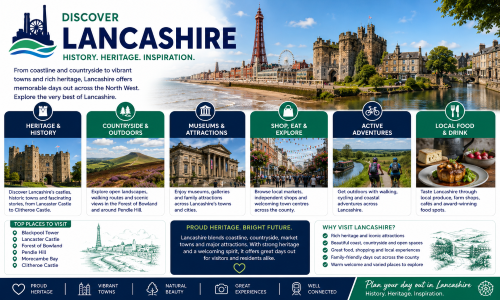
Lancashire's Food, Heritage and Places to Visit Add Everyday Character
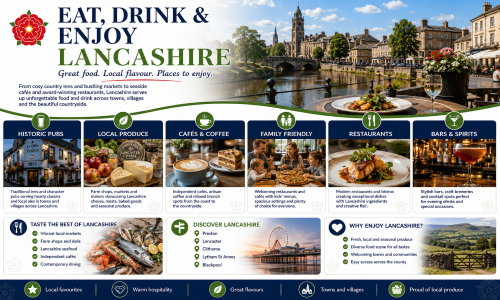
Lancashire’s appeal is not limited to scenery.
The county has a strong food and hospitality identity, particularly around the Ribble Valley, with village restaurants, pubs, farm shops, and producers.
Clitheroe sits at the centre of much of that activity, with nearby destinations including Whalley, Ribchester and rural communities around the valley. Visit Lancashire also identifies the Ribble Valley as a destination known for food, countryside, and heritage.
Elsewhere, residents have access to places such as:
- Lancaster Castle;
- Blackpool Tower and the seafront;
- Morecambe promenade;
- Clitheroe Castle;
- Pendle Hill;
- historic villages across Bowland;
- Lytham Green;
- coastal walks around Morecambe Bay and the Fylde.
Morecambe has a long promenade, views across the bay, and connections to Heysham.
These details matter because relocation decisions ultimately come down to ordinary life.
A county can be financially practical and still need to feel like somewhere you want to spend your time.
The Right Lancashire Move Should Also Work Financially
The best relocation is not necessarily the cheapest house or the most prestigious postcode.
It is the place where the mortgage, commute, household costs and future plans can continue to work together.
Lancashire can offer very different borrowing situations.
A first-time buyer looking at a terrace in Burnley may face a completely different mortgage decision from someone purchasing a larger rural property near Clitheroe.
A coastal apartment may involve leasehold and service-charge considerations. A countryside home may involve land, outbuildings or unusual construction. A company director moving to Lytham or the Ribble Valley may have income that requires a more detailed lender assessment.
When property values are higher, or income is more complex, High Net Worth Mortgage Brokers can help users compare advisers with relevant experience.
Larger financial commitments may also make High Net Worth Protection Services relevant when considering how household borrowing could be protected.
For older homeowners, the financial question may be different again. Someone moving towards the coast or countryside may be considering retirement, downsizing or how their property wealth fits into later life. Separate information is available through Equity Release Advisers in Lancashire. Equity release is a significant financial decision and can affect inheritance and entitlement to means-tested benefits.
If you’ve reached the point where you need personalised mortgage advice, use the Find a Mortgage Adviser directory to compare advisers by location, language, gender, and mortgage specialism.
The question why move to Lancashire may begin with lifestyle.
The final decision should also make financial sense.

Why Lancashire is the Perfect Place to Call Home
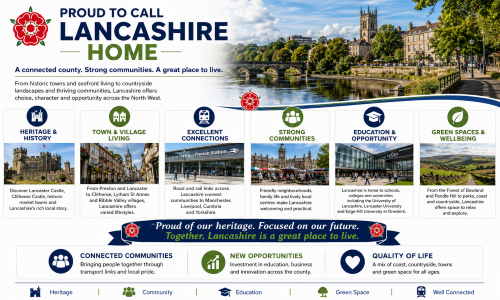
Lancashire offers balance. It has coast, countryside, jobs, schools, universities, transport links and a strong sense of place.
The county suits many lifestyles. Families can look for schools, parks and larger homes. First-time buyers can compare more affordable towns. Commuters can use rail and road links. Students can study at local universities. Retirees can choose coast, countryside or village life.
Lancashire also has a clear identity. The red rose, historic towns, market communities, seaside resorts and rural landscapes all add character. Visit Lancashire describes the county as stretching from Blackpool and its Tower to the Forest of Bowland and Pendle Hill.
For many movers, the appeal is simple. Lancashire offers value, variety and access. It gives buyers options without losing local character.
Browse Our Advisers in Lancashire
Once you have narrowed down where you want to live, the next question is whether your mortgage fits the property and the circumstances behind the move.
Connect Experts lets you choose mortgage advisers by location and other relevant preferences.
Compare advisers based on the decision you need to make rather than simply choosing the closest postcode.
Connect Experts is a mortgage adviser directory and matching platform. It does not provide mortgage advice directly. Mortgage advice is provided by the adviser or firm you choose.






People who found this page helpful also explored these related topics:
Mortgage Broker in Lytham St Annes: Advice That Fits

Mortgage Broker in Nelson: Expert Help for Local Buyers
Mortgage Broker in Lancaster: Advice for Smarter Decisions

Mortgage Broker in Whalley: Clear Advice for Valuable Homes

Mortgage Broker in Fleetwood: Expert Mortgage Decisions
Mortgage Broker in Clitheroe: Advice for Distinctive Homes
Neighbouring Counties
FAQs: Why Move to Lancashire?
Is Lancashire a good place to move for more space?
Lancashire contains a broad range of property markets, including traditional terraces, suburban family homes and larger rural properties. What your budget can buy varies considerably by area, so someone moving from a higher-priced region may find different options depending on whether they look to Preston, Lancaster, East Lancashire, the Fylde Coast, or the Ribble Valley.
Which parts of Lancashire suit commuters?
That depends on where you need to travel. Preston has major national rail connections, while the motorway network provides access towards Manchester, Cumbria and other parts of the North West. Chorley and parts of central and east Lancashire may suit some Manchester commuters, while West Lancashire can provide connections towards Liverpool.
Where should I consider for rural living in Lancashire?
Ribble Valley and the communities around the Forest of Bowland are among Lancashire’s best-known rural areas. Areas around Clitheroe, Whalley and smaller Bowland villages offer a different setting from Preston, Blackburn, Burnley and the coastal towns. Rural homes may require additional mortgage checks when land, access, or unusual construction is involved.
Can I live near the coast in Lancashire?
Yes. Lancashire includes coastal communities around the Fylde Coast and Morecambe Bay. Options range from larger centres like Blackpool and Morecambe to residential areas such as Lytham St Annes. Buyers should consider property type, insurance, leasehold arrangements and local flood information where relevant to a particular home.
Is Lancashire suitable for first-time buyers?
Lancashire contains areas with very different entry prices. For example, ONS data showed first-time buyers paying an average of approximately £181,000 in Lancaster and £200,000 in West Lancashire in July 2026. Actual affordability depends on deposit, income, commitments, and lender criteria, not local averages alone.
How do I find a mortgage adviser for a move to Lancashire?
Use the Connect Experts directory to compare advisers covering Lancashire by location and mortgage specialism. The closest adviser isn’t necessarily the most suitable, especially if the application involves self-employed income, larger borrowing, an unusual property, or specialist lending.